top of page

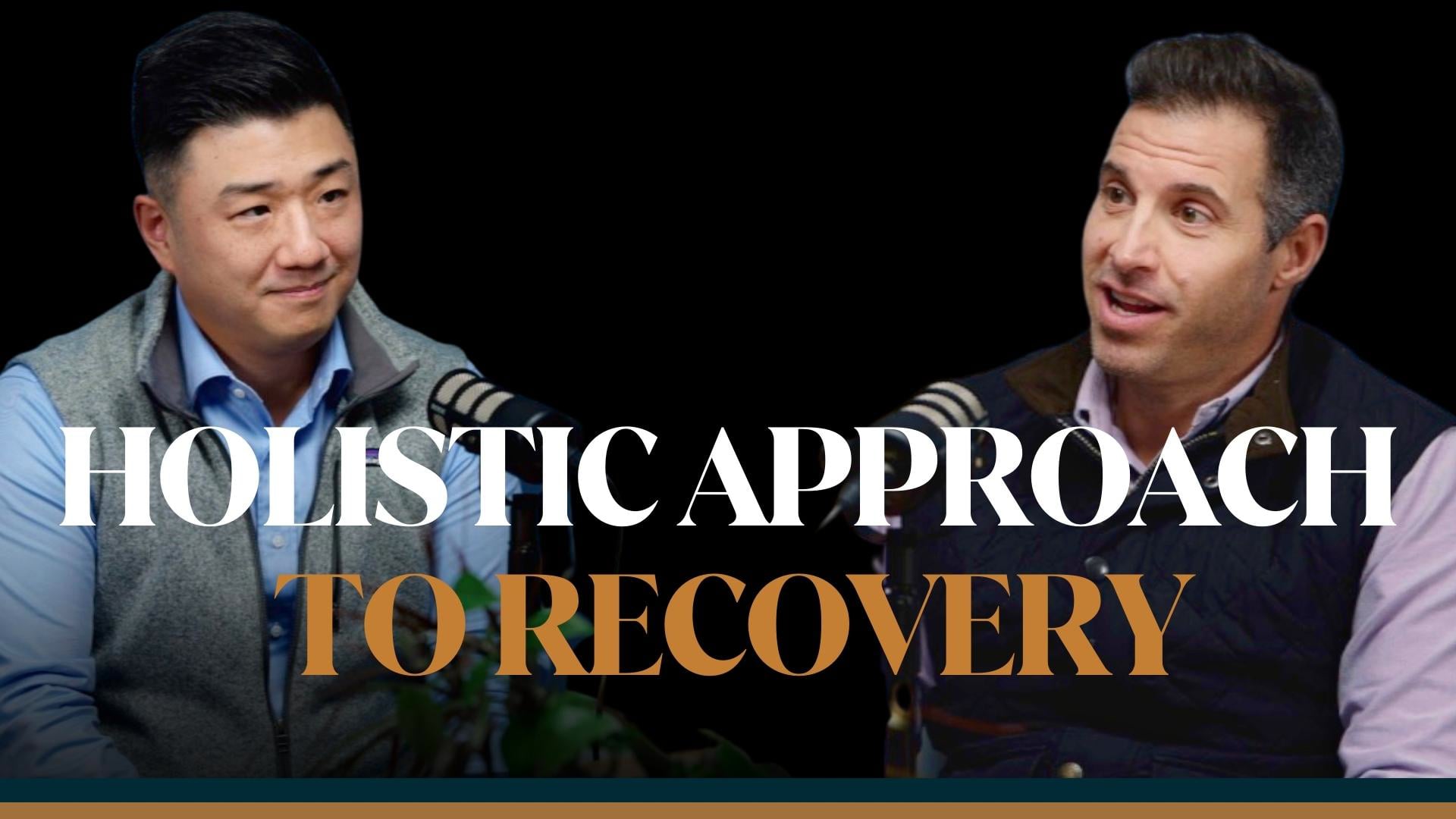
A Holistic Approach to Recovery:
Uncovering the New Waters Recovery Method with Dr. Harold Hong & Graham Doerge
21:24 min | Dr. Hong & Graham | Finding New Waters
Dive into the world of substance detox and recovery as Graham Durge, CEO and founder of New Waters Recovery, engages in an insightful conversation with their medical director, Dr. Harold Hong. Together, they shed light on their unique and holistic approach to addiction treatment, focusing on the integration of cutting-edge detox protocols, comprehensive wraparound care, and alternative therapies to ensure lasting transformation.
Facebook
Twitter
Pinterest
Tumblr
Copy Link
Link Copied

"So the holistic therapies are there to
re-energize and rejuvenate you. . But more than that it's, these are things that emotionally healthy people do every day."
Dr. Harold Hong
Graham Doerge: [00:00:00] So, good afternoon. My name is Graham Durge and I'm the CEO and founder at New Waters Recovery, and I'm sitting here today with our medical director, Dr. Harold Hong. And we wanted to talk about a couple different things here today. And just very, very fortunate. I feel so fortunate to have Dr.
Hong here on our team. You know, I've been doing this for, for a very long time now, and, you know, we've worked with a lot of medical professionals and, you know, it's very hard to find somebody who. Understands the, you know, number one, the detox process, but really the importance of being kind of on the cutting edge of, you know, what's out there and how we treat our patients.
And, you know, Dr. Hong is you know, one of these gentlemen who really loves to just absorb himself in the research. And you know, by virtue of that, you know, we, we have a couple really interesting things going on here at New Water's. Recovery we're using. . So very new kind of detox protocols. Not, not new in the sense that they've just been created in the last, you know, year or two.
They've actually been u utilized, [00:01:00] you know, throughout the country for some time now. But you know, for whatever reason or not, they're not really highly used in the substance use world. So I love to open it up to him and talk a little bit more about, you know in his role here, how he supports our, our.
And also, you know, talk a little bit about the holistic modalities that we, that we put forth here, and really the importance of, of, of that in in helping our clients stabilize successfully. Yeah.
Dr. Harold Hong: Well thanks for that intro, Graham, that . You're too kind. Really. Hmm. It's great. So I think that the, what makes new detox so special is that it's not just about having the right medications.
It, it's truly holistic, like, Soup to nuts. So on, on the, there's three things that make this detox truly unique. Like best in class, one of a kind. The first is the way we do things with medications. The second piece is the wraparound care with the nursing staff and the recovery advocates. And the third piece is the [00:02:00] holistic therapies.
The. It's when you put all three of these things together, that's truly a holistic detox, not just from the substances, but the behaviors, the mindsets, the people, places and things outside this facility. It's an incredible end-to-end experience, getting people a fresh, clean start, and then the aftercare referrals to the best quality residential treatments.
That's really like the finishing piece for this detox. I'm happy to talk about each of those pieces a little bit more. Mm-hmm. .
Graham Doerge: Yeah, and I think it's also really interesting because you know, I see you on a day-to-day basis engaging with our clients, right. And I think that you engage with our clients in a way that not a lot of other professionals do at, at, you know, at at other facilities.
And, and you really have the. You put so much time forth and and you really spend, you know, a great, a great deal of time getting to know them and getting to know their history and getting to know their family history and all of those different aspects, cuz that's so, so essential in kind of understanding the whole [00:03:00] person.
But you know, again, you know, that's not always done. It's, it's, you know, unfortunately in the medical, you know, world today we've, we're kind of bogged down by these, you know, 15 to 30 minute appointments that are, you know, kind of in and out, you know, and, and it's, and it's. , I think it's hindered our, our, our medical system a lot.
So you know, talk a little bit about that and the importance of that. Yeah,
Dr. Harold Hong: absolutely. So I, I'm coming from a, a particular story myself where I am a, I am a recovery from family of organ trauma, and I see how that, that those difficulties and the way that it set. , it led me to get into like kind of processes that would take me outta reality which is just another form of addiction.
Mm-hmm. . So at the end of the day, addiction is a way of escaping reality to escape emotional pain for people that don't know how to deal with it and an emotionally appropriate or mature manner. And so I had this great dinner with Desiree Saini and some of our other like esteemed providers in the c.
And [00:04:00] this one therapist said this line that just, I'll always remember, she said, wherever there's addiction, there's trauma. Mm-hmm. , right? And so we're, we're trying to do more than just detox here, right? Like, we're trying to help people get to the root. We're trying to, people find total transformation from the beginning.
And so I feel like if we're not getting into the root causes, like what's the story underlying the addictive behaviors, what's the story underlying the difficulties dealing with emotional? We're, we're doing a huge disservice, right? So we have the time, we have the opportunity. We're trying to find the right setting for Africa.
If you know how to have the conversation and you can get to the answer in a safe way, it's definitely no regrets. Go for it. And it, it's a really spiritual and professionally like, super rewarding experience to have those conversations with people. And when they have it in a safe way, they find relief, they find joy, they find.
Mean, that's a good day.
Graham Doerge: Yeah, that's a good day. And also I feel like, you know, so many of [00:05:00] these people have not been honest with their providers. Right. And they're scared to, and this is maybe the first time where they're absolutely like, okay, I can actually be honest with this person because he's kind of, you know, he is meeting, we meeting with empathy, with love, with compassion and all these things and mm-hmm.
And, and unfortunately you're just not gonna get that everywhere, you know? And that's just, that's not the norm, you know, in this field right now.
Dr. Harold Hong: I, I love the that saying, not right now. Right, right. Because yes, the, it, it is totally doable. It's totally possible. It is so much more joyful practice to do it that way.
Yeah. Where you're seeing people authentically dream the empathy of respect and dignity and I mean that's, that's totally a foundational principle of my own personal recovery is everyone is precious and wonderful. Mm-hmm. in their own way, everyone is doing their. No one is a lost cause. No one deserves to have a painful, horrible life, right?
People deserve to be treated with respect and dignity because they [00:06:00] are precious and wonderful people. And when you go into the room and you begin by seeing the precious wonder that they are, your eyes light up and you can see them peacefully. Mm-hmm. , they, the guard goes down and the answers come out.
Yeah. And it's. It feels good to do the right thing the right way.
Graham Doerge: Yeah, a hundred percent. Yeah. And you know, one of the other, you know, pieces that we really layered into this, this program and was, was so important to me as we were kind of building out, you know, all the programmatics was you know, obviously developing all these holistic modalities as well.
So, you know, we, we here are doing, you know, yoga almost on a daily basis. It's really. What do we call it? Restorative yoga, which is, you know, it's pretty light yoga, but, you know, it's so important even at this, this phase of, of detox and at this early stage in, in the process too. Get up, get outta bed, start moving, start, you know, just getting the blood flowing a little bit.
Absolutely. And it makes you feel so much better. And Absolutely. You know, that's kind of the start of the day. And then our clients go [00:07:00] into meditation and they start every day with, with a meditation group. And, you know, throughout the day they're getting services such as yoga or, or, or, excuse me, acupuncture, massage utilizing our infrared sauna, doing IV therapy.
And then we, you know, we actually just started doing some breath work with some clients, you know, about a month and a half. and have gotten incredible feedback from that. So, and that's something that I do in my own personal recovery and I think is just such a powerful, powerful tool to, so, you know, and, and, and it's interesting because, you know, a lot of folks who kind of come in and talk to us are saying, you know, this is really early in the process to be doing a lot of this stuff for some people.
And, and it's kind of my opinion that it's like, it's never too early. I mean, we need to, we need to get these people, you know, starting to do this stuff now so that they can start adapting these tools because these are the things that are gonna help them. The complexities of life and sobriety. Wonderful.
Right? 1%. But you know, yes. There, there's a, there's a complete holistic, you know, a piece to that. But then there's also the underlying kind of medical component too. And this actually, [00:08:00] these modalities are. helping people to stabilize quicker, get to baseline quicker, and just have a more pleasant experience while they're going through detox.
Right. So can you talk a little bit about that?
Dr. Harold Hong: Yes, it, yeah. I'm super excited about how the detox protocols and the holistic therapies are just going like together, like peanut butter and jelly. Right, right. So the traditional detox protocol is they would call like a symptom trigger therapy. So you would wait for a person to go into moderate to severe with.
you would assess them frequently, like several times an hour. And every time their score hits a certain number, you give them medications, you reassess. And if it's still going up, you give them more or more. And so people are always feeling on the bubble of being unwell and they're getting medications that tend to make you feel unwell too.
So it's, it's quite normal for a detox to be spending the first two or three days in. Just dealing with the detox process itself, right? But what we're so excited and we're seeing here is with the benzo [00:09:00] sparing protocol, people are having very low symptom severity scores. They're going downstairs, having breakfast, going to yoga, and sitting in group.
On day one, and this is just like really impressive. This happens consistently. It's almost like to be expected rather than the conventional protocol where that's more like the exception to the rule, right? So that's a game changer. Mm-hmm. . And we just recently had a client this last week who I think really embodies that whole experience and how, what that unlocks, what that enables.
So she was feeling great on day. . I saw her early in the morning and she was feeling anxious about how this detox was gonna go. Like what things would look like for her at work. Like how does she keep her, her disease, a secret from her colleagues and just tons of anxiety. I saw her the next day in the afternoon and I was expecting a little bit of, you know, how do I kind of de-stress or reframe the, the challenges that she's [00:10:00] seeing?
And it, I was shocked because it's so worth her. . I've had the most wonderful day ever, , and I was like, oh, tell me more about what's been going on. And she said, it's been years since I've done yoga. It's been years since I've done meditation. I've, I've always had this thought in the back of my mind that I should be doing these things cuz I know it'll help me.
But actually felt more guilty that I didn't do those things. And it's just so, it feels so good to do this again. Yep. And I was, I was just so happy for. But then I reflected back to her that, you know, we're doing this for two reasons. You know, one is we feel like holistic therapies are getting people re-energized.
Like just your body's beat up, your body's stressed, you're dehydrated, you're under undernourished. Lots of problems. So the holistic therapies are there to re-energize and rejuvenate you. . But more than that, it's, these are things that emotionally healthy people do every day. Mm-hmm. , right? Like the, the [00:11:00] life that, and the daily rhythms that we're creating for the clients here.
This is just what healthy people do ordinarily, right? Yep. Right. And I think it's, it, it, it brings me back to this moment where I was leaving a really powerful residential therapy experience for myself personally. And, you know, we had all had this very powerful. , we're all thinking for ourselves.
Now we're going back to the real world. Okay. And that's scary. The group facilitator, just, this is another phrase I'll always remember, he said, what you are going back to is the ordinary world where people do things in the ordinary way, and we know how that works for most people down well, right. The real world is actually where you are.
Right. , the real world is here where we're talking about what's really going on and dealing with it in a realistic way. Mm-hmm. , and that, that just perfectly captures what this woman was talking about. Mm-hmm. in her ordinary [00:12:00] world, she lived this ordinary way of doing things where we're used to neglecting ourselves.
We're used to just pushing ourselves super hard at work, pushing ourselves super hard with friends and family, but not keeping stock of where are my needs, where are my wants at? How do we get that met in an appropriate. This is a place where we give people back on the treadmill of understanding how to do that in a realistic way, and it's so extraordinary for people to experience that, but that's what we hope they take back and make their reality.
Yeah. So they're getting detoxed from alcohol, from opiates, but also from these ordinary dysfunctional waste, right. That we normally get. .
Graham Doerge: Yeah. I mean, that's beautiful. And I, and I always think back to, you know, listen, we need to, first and foremost, you know, we need to arrest the addiction, right? And we need to kind of, you know, get, you know, we need to separate that piece, and that's what we're kind of doing here and dealing with the kind, the crisis and all of that piece.
But it really, it's such a beautiful thing to see see the clients really grabbing hold of these, of these, you know, various services that we [00:13:00] have. And, and then just having such an impact. And, and as you said, you know, we, I think it was our, our second or third client, the gentleman came in and. I don't even feel like I'm detoxing.
And, you know, and that was when you kind of explained to me this detox, the benzo sparing protocol in, in a little more detail. And I'd love, you know, for our audience to, to hear a little bit more about that as well. Yeah. Because I think it really is, it's cutting edge stuff and I hope more facilities do start utilizing it because it really has been so successful for us.
And, you know, listen, this, this doesn't have to be a traumatic experience, right? It doesn't have to be a super uncomfortable experience. We can, we can do this in a really comfortable manner and do it with respect and dignity and, and do it so that you're set up for success when you leave here, right?
So, mm-hmm. . So talk to us a little bit about the benzo sperum protocol.
Dr. Harold Hong: Sure, sure. Yeah. So the Benzo Spring Protocol is a departure from how we initiate moderating your nourisher as bears. Okay. In the traditional method, we use something like Ativan. You could also use Valium or Librium. These [00:14:00] are all like siblings to each other in the same family, and what they do is they hit the same receptor that alcohol hits essentially.
And when we drink alcohol, it brings our adrenaline levels down and brings our glutamate levels down. And those are excitatory transmitters. So when you, when people drink, they feel suppressed. When you take away alcohol, you get a surge of a adrenaline. You get a surge of glutamate. And that's why when people are te detoxing, they get shakes, they get tremors.
They get sweats, their heart races, their blood pressure shoots up and it can get so excited that you actually have a seizure. Yeah. Right. So in the traditional method, we use Ativan, Valium, Librium, something in that family because it's like alcohol for your brain. Mm-hmm. and like super interesting side.
The first detox happened in ancient Greece, and it was people going away to a residential facility getting a [00:15:00] jug of wine. And every day they got a new jug, but the jug would have more water in it as each day went by. Hmm. And so they were literally being tapered off of alcohol in ancient times. And that is basically similar to how we still do it, right?
Yeah. Right.
Graham Doerge: And you'd think we would've found a better way at this point. Well, here
Dr. Harold Hong: we are. Here we are. Here we are, right? Yeah. So these, they're neuroscientists who are focusing on seizure states, delirium states. They're looking at how alcohol causes these things, and they're saying it's because there's a surge.
There's a storm of adrenaline, there's a storm of glittering. And interestingly, the one way that your brain protects yourself from alcohol is it stops making the gap or receptor. So that makes detox very difficult for some people because you're giving ati. , but there's nowhere for it to land. Hmm. There's nowhere for it to cause the downstream effect of bringing the adrenaline down, bringing the glutamate down.
And those people will commonly have what we call a complex withdrawal, and they may need to be [00:16:00] managed in an intensive care unit. Yep. But again, these neuroscientists, they find, okay, the problem isn't, how do we simulate GABA enough? Hmm. The problem is how do we calm the surge of adrenaline and the surge of glutamate?
And for people who don't have that GABA receptor, like what can we do? And they said, we actually know that there's a bunch of medications that bring those neurotransmitters down. Claine, guine, gabapentin, topiramate. We know for sure that these medicines bring those neurotransmitters down. What would happen if we used those medications instead?
And so Dr. Mal at Sanford Healthcare and then the Kaiser Permanente system in Northern California picked. And this last year they released this study that involved tens of thousands of patients using the banzo spraying protocol. And it showed that it was faster so people were ready to discharge much faster than people ons a or other protocols.
And it was safer and viewer transmission transfers to icu. Mm-hmm. . So [00:17:00] it's essentially better, faster. and the clinicians for using this, they'll say, you'll know who's on the Benzel Spa protocol because there are the people who are sitting comfortably in unsure of reading the New York Times. Right.
And you know the people that are on the other protocol because they're in bed feeling uncomfortable and they might be a little bit confused. Right?
Graham Doerge: Yep. So that's the critical reason here. And it's, and it's tough too because you, you have clients that come to us who. You know, treatment savvy, we'll say, and are maybe med seeking, and they want Ativan and they want these medications.
Right. And, you know, we're, we, it's our job to kind of educate them on that this is a, a better, faster, safer, you know, protocol. And, and, and try to kind of help 'em navigate that. But it is interesting how you see, you know, despite that information and that knowledge, people still kind of, you know, they wanna hold onto that, that that crutch still.
Yeah. Absolut. Yeah.
Dr. Harold Hong: As a clinician, having massaged acupuncture, breath work, [00:18:00] yoga, meditation, high quality group therapy, high quality individual assessments, like having that backstop of all of those supportive services, it makes my job so much easier.
Graham Doerge: Totally. A hundred percent. And, and also, you know, I think as well you know, it just keeps the clients busy, right?
And that's a huge, huge piece. You know, if you haveli, if you have 20 clients in your facility and you know, they're all just kind of hanging out and they're in bed and there's not a lot going on, and maybe there's a group here, but they're not really, you know, forced to engage in, in any services or anything like that.
And we don't force anybody to, to engage in services, but we highly recommend it. Right. Yeah. We, and our team does a very good job at getting people, you know, involved and, and it's really for their benefit. Because listen, our head is a scary place, you know, and if we're just sitting in bed and and just kind of ruminating about this, Our, the substances that we're, that we're using to self-medicate have been taken away from us.
And now all these feelings and these emotions and these urges and all this stuff has kind of come flooding in. [00:19:00] Yeah. And it's like we gotta keep ourself engaged and busy and out of our head and, and these, you know, these modalities that we, that we offer here, do a great job of that. And I think by virtue of that, we have a lot.
people leaving against medical advice. Mm-hmm. . And it just, you know, from an operational perspective, it, it, it really helps from a lot of different
Dr. Harold Hong: angles on my own. Hundred percent. Yep. If you're, if you're going six year, six months, six years of drinking, like living in intoxicated state, there's a lot of problems that have accumulated over that time.
Yes. And going 4, 5, 7 continuous days without being, I. , it's a terrifying time of taking stock of all the things that have happened. Yep. But at the end of the day, it's, it is perfectly realistic and okay to take one step at a time, like one small bite at a time, and, and you'll get through all those problems.
You'll process it. But if you get into your head, you get into your old ways of thinking and forecasting catastrophe, and you're, there's, there's nothing good for you [00:20:00] in your. Yep. Yeah. It's hard to take a positive step forward. Yeah. Right. But having all these positive activities, having positive people and realistic people talking through that moment.
Yeah.
Graham Doerge: Hold. Yep. It is, it really is. Well, it's been a pleasure spending some time with you today and, and is getting a little bit more information on, on some of those procedures and processes and we look forward to hearing more from Dr. Hong in the future. All right, thanks
A Holistic Approach to Recovery: Uncovering the New Waters Recovery Method with Dr. Harold Hong
Description: Dive into the world of substance detox and recovery as Graham Doerge, CEO and founder of New Waters Recovery, engages in an insightful conversation with their medical director, Dr. Harold Hong. Together, they shed light on their unique and holistic approach to addiction treatment, focusing on the integration of cutting-edge detox protocols, comprehensive wraparound care, and alternative therapies to ensure lasting transformation.
Dr. Hong shares his personal journey, emphasizing the significance of addressing underlying trauma in the addiction recovery process. He explains how New Waters Recovery's detox program stands out from the rest, not only due to its carefully tailored medications, but also through the all-encompassing support provided by their nursing staff and recovery advocates. The incorporation of holistic therapies further elevates their approach, leading to a truly transformative detox experience for clients.
Listen as they discuss the importance of establishing meaningful connections with clients, taking the time to delve into their history, family background, and personal experiences to understand the individual on a deeper level. In a world where many medical professionals are burdened by short appointments, the compassionate and empathetic care at New Waters Recovery sets a new standard for treatment.
Hear Dr. Hong's reflections on the profound impact of honest, safe, and open communication between clients and providers, and how this level of trust and understanding can lead to breakthroughs in the healing process. Together, they envision a future where this level of patient-centered care becomes the norm, fostering a more rewarding and effective approach to addiction recovery.
Don't miss this thought-provoking discussion on the power of a holistic approach to recovery, and how the innovative methods at New Waters Recovery are making a lasting difference in the lives of their clients.
#HolisticRecovery
#AddictionTreatment
#SubstanceDetox
#NewWatersRecovery
#DrHaroldHong
#GrahamDoerge
#DetoxProtocols
#WraparoundCare
#AlternativeTherapies
#PatientCenteredCare
#UnderlyingTrauma
#AddictionRecoveryProcess
#CompassionateTreatment
#RecoveryAdvocates
#EmotionalHealing
#SubstanceAbuse
#TransformativeDetox
#AddictionAndTrauma
#HealingJourney
#RecoverySupport
bottom of page