top of page
Zumrad Ahmedjanova
Exploring Trauma, Attachment Styles, and Somatic Experiencing
45:05 min | Zumrad Ahmedjanova | Finding New Waters
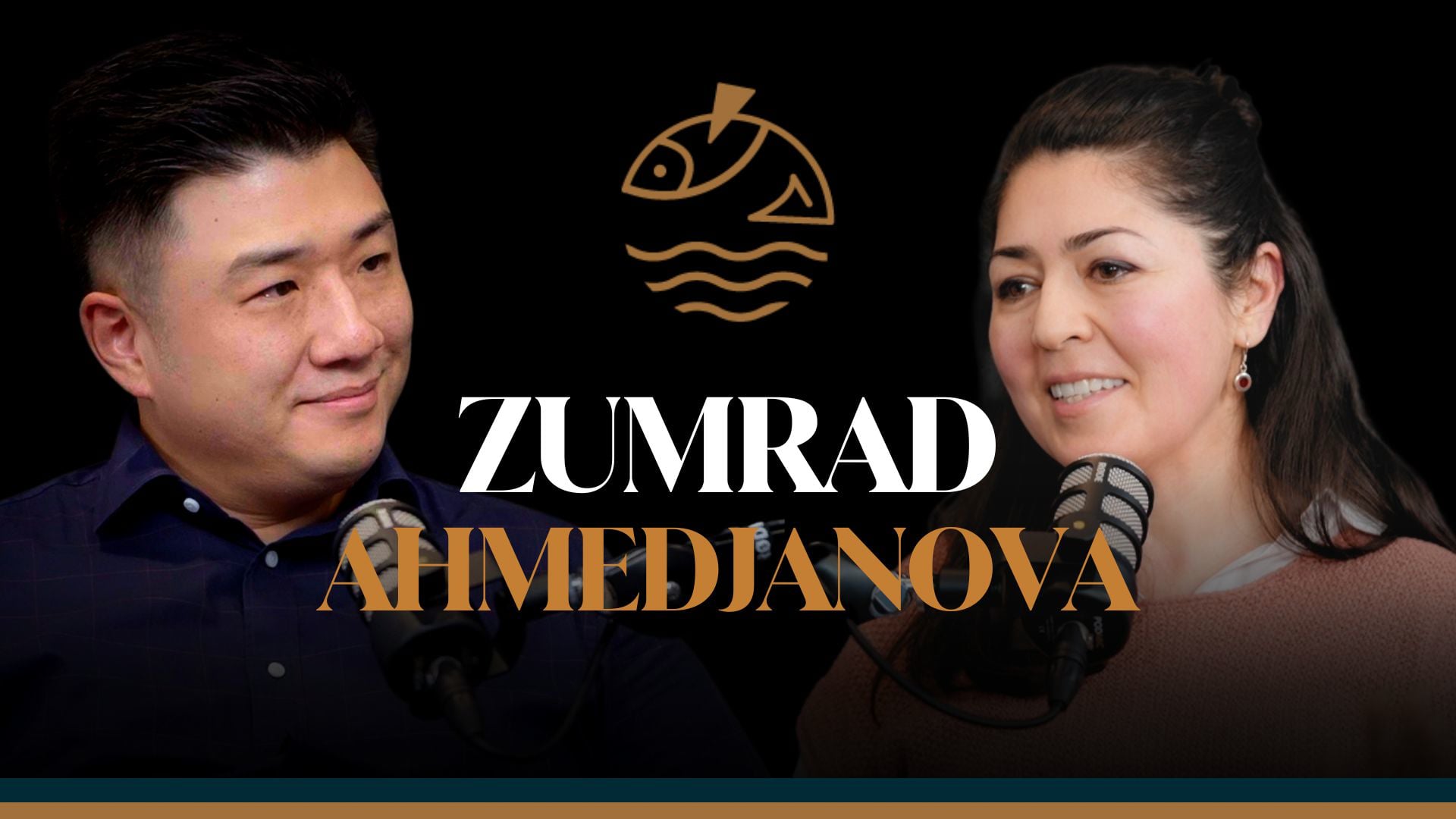
In this thought-provoking episode of Finding New Waters, host Graham Doerge sits down with Zumrad Ahmedjanova, a clinical social worker, addiction specialist, certified supervisor, and owner of The Art of Wellness group practice. With a unique background in cultural anthropology and social work, Zumrad brings a holistic approach to her work in therapy and healing.
Facebook
Twitter
Pinterest
Tumblr
Copy Link
Link Copied
.png)
"The body never lies. You can tell your brain this is what's happening, but the body will show."
Zumrad Ahmedjanova
Zumrad Ahmedjanova: [00:00:00] I think it's how people define what trauma is. And when they think trauma, they think about like a war, war type trauma. Yes. Like they saw something atrocious. Right. Like a murder or, or something like horrible. A trauma can be so, so, uh, not necessarily that kind of a scary, big, atrocious thing, but for a child, let's say, right.
Zumrad Ahmedjanova: I'm talking about a child in this. Trauma can be parents, uh, forgot to, to pick, to pick me from daycare. Yeah, yeah. Or, or left me at the gas station where they were getting gas and everybody got in the car and drove away and then they. Like God, like, or remember, oh, one child is missing, right.
Graham Doerge: Let's go back.
Graham Doerge: Or it could just be someone, yeah, someone said something to you in a way that Right. You know, maybe it wouldn't have been traumatic to one person, but the way that it was sent to you in that time, in that moment, you took that internal in, you internalized that. Internalized that in a traumatic way.
Zumrad Ahmedjanova: Exactly. So we so complex like, like our brain and our like system's so complex and just saying it's only one way you can get trauma [00:01:00] and there's no way you can get another. Well, because your parents are perfect and there's actually no perfect parents, right? And let's
Graham Doerge: talk about it.
Graham Doerge: Good afternoon and welcome to Finding New Waters. My name is Graham Durge and I'm the founder and c e O of New Waters Recovery in Raleigh, North Carolina. I'm joined today by our medical director, Dr. Harold Hong, and Zoom Rad, AMA Genova. Zoom Rod is a clinical social worker, addiction specialist, certified supervisor and owner of a group practice called The Art of Wellness.
Graham Doerge: She spirals her expertise and passion into every aspect of her work. With over 15 years of experience, diverse educational background, [00:02:00] and fluency in multiple languages. Zoom Rodd embodies a unique approach that a phosphorous healthy relationships and embraces the connection between mind and body.
Graham Doerge: Guiding individuals and couples through personal and professional challenges. Zira utilizes her vast expertise in addressing emotional problems, offering support and healing. Her commitment to professional growth and collaboration with renowned experts further enhances her ability to provide empathetic and effective therapy.
Graham Doerge: In addition to her therapeutic practice, Zara runs couples workshops that offers invaluable guidance and support for relationships. The upcoming upcoming relationship marriage preparation one day workshop on May 7th is tailored specifically for couples who are early in their relationships, providing them with the tools and insights needed to build a strong foundation.
Graham Doerge: As a speaker and a supervisor, zoom Rodd shares her knowledge on the bio psychosocial perspective and strategies for emotional wellbeing. Connecting with diverse audiences and clients in a meaningful way in the ever-evolving field of therapy and healing. Zum [00:03:00] Broth stands out as a Profe. Powerfully effective, stands out as a powerfully effective therapist and leader enriched by her deep understanding of cultural identity.
Graham Doerge: Our goal in creating new, finding new waters is to provide a resource for families to help navigate the complexities of supporting a loved one struggling with substance use or mental health. When we find ourselves in crisis due to one of these issues, most people have no idea where to turn. We hope to shed some light onto what is often the darkest hour for many families.
Graham Doerge: Thank you very much for being with us today, Emre. Thank you. It's a pleasure. It's an honor too. Fantastic. Thank, thank you. Well, and um, you know, I, I like to kind of start off, uh, in, in this way because I find it, oh, it's always very interesting to, uh, get a little bit of background and understanding of maybe how you found yourself, uh, coming into this field, how you found yourself doing this type of work and really what, what drives you.
Graham Doerge: What, what kind of, uh, brought you to, to work into the behavioral health field to begin?
Zumrad Ahmedjanova: Well, I did my master's in cultural [00:04:00] anthropology and I was very interested like in the dynamic between like human and society and, and I was going deeper and deeper into that. I got like more into psychology parts of it.
Zumrad Ahmedjanova: Yeah, because it just cannot separate. Those two just felt like that to me at that time and when it came questioned like, what's next for me? And I was talking at that time with my advisor. Uh, he and, and because I was also new to United States and I was telling this is what my aspirations and this's what I wanna do, and I was thinking of going further, do PhD.
Zumrad Ahmedjanova: And he asked, do you what? What do you wanna do with your PhD? And that was such a good question. Like what do I wanna do with PhD? So I thought, I really wanna work with people. Hmm. And he said, this is not the right field for you. He said, you probably social work will be a better field for you. Yeah. So that's how I kind of pivoted and I went to uh, to do my social work.
Zumrad Ahmedjanova: Yep. Master's [00:05:00] degree. At unc actually, I got to, I got to u unc and um, that's how the whole process started. Very
Graham Doerge: nice for me. Very nice. Yeah. And I know specifically you work, uh, a lot with couples and relationships. Can you, can you elaborate a little bit on that and, and your kind of the modalities that you use around that?
Zumrad Ahmedjanova: Yeah, so, um, Well, when I start working with, with individuals, like I, I just could not avoid, but like noticing what really affects individuals. Mm. So it's like slowly just doing D B T and C bt that's how it started. And this is how I, we all mostly trained, you know, uh, um, in programs and social work programs.
Zumrad Ahmedjanova: I start noticing that there's more into that. Like, so the. The past effect people like the childhood effect, you know, the way how they grew up with their parents. Mm-hmm. The attachment styles. So I start like looking for the attachment styles. Yep. Mm-hmm. As I start looking for attachment styles and studying it more, I start learning, oh.
Zumrad Ahmedjanova: Like in addition to attachment [00:06:00] styles, there is a part of, uh, like how they, uh, regulate themselves. Like, okay, like they have insecure attachment, like mm-hmm. How they can regulate themselves. So I got into sematic experiencing modality, like Yeah, like learning. Um, regulation and how to titrate those, like reg, like titrate the, the, the ways of, uh, discomfort in the body.
Graham Doerge: Yeah. And how are, how are you doing that specifically with the somatic? Talk a little bit about the somatic experiences.
Zumrad Ahmedjanova: The somatic work. Um, it's, it's, it's a really interesting actually modality because it basically says, That body never lies. Mm-hmm. You can tell your brain this is what's happening, but body will show.
Zumrad Ahmedjanova: Right? Yeah. And the body's not even on level of, it's kind of like so subconscious. It's very intuitive that sometimes people don't even understand. They just feel. Weird. You know, they don't un, they, they cannot really, really name it or pinpoint and put finger on that. Um, and [00:07:00] the, the sematic work helps to like really get in touch with the body mm-hmm.
Zumrad Ahmedjanova: And say, okay, what is it I'm really feeling in the moment. Yeah. What's happening. Yeah. It's like some very subtle, subtle things like the way how we look, the way how we, uh, recognize things like it's a milliseconds of memories Yes. Of milliseconds, of like emotions. It's so fast because like the, the neuro pathways in our brain became so, um, So fast when we connect one event, uh, and the trigger that happened before, right?
Zumrad Ahmedjanova: Yeah. Mm-hmm. It just, it happens so fast. How we react to that, it can just take milliseconds.
Dr. Harold Hong: Yes. Yeah. There's, there's huge research going on these days about interoception. Yeah. Which is the feelings that we receive from our bodies. Mm-hmm. And it, it's, it's breaking up this whole idea. We are our brain.
Dr. Harold Hong: Mm-hmm. Like, if, if it's not in our brain, then it doesn't matter. Mm-hmm. And we are really depriving ourselves of so much of our [00:08:00] wisdom and our skill when we don't pay attention to our body. And, and it shows up everywhere. Most interestingly is it shows up in traders, so in, you know, on Wall Street. Oh yeah, yeah.
Dr. Harold Hong: In London, the traders who listen to their gut about go or dogo do better than the people who develop these elaborate. PowerPoint presentations about things. Interesting. Right. And um, and it's so interesting cuz when it comes to relationships, I feel like there are so many people who have a gut feeling mm-hmm.
Dr. Harold Hong: About their partner, but their addiction or mm-hmm. Their social expectation tells them to, to do something else. Yeah. And, and it. Usually it doesn't work out.
Zumrad Ahmedjanova: That's right. It's like there's a belief system or societal expectation of family expectation and then my gut and when my gut against all of that.
Zumrad Ahmedjanova: Right, right. It's just so hard to like, Don't talk
Graham Doerge: to each other. Yeah. I'm 31. I should be married. Yes. I should be having kids now. Yeah. A career pass. You know, I'm on this [00:09:00] trajectory, but this person's not the right person, but it's who I'm with now. Mm-hmm. Right, right. Mm-hmm. And I think people get into long-term relationships and where Yeah.
Graham Doerge: The people they shouldn't be. Right. That's right. Yeah. So.
Dr. Harold Hong: Mm-hmm. But actually, attachment attachments sound like there's a really interesting New York Times article that came out talking about how TikTok has put so much psychological. Into the world. Mm-hmm. And now it's getting into dating profiles. Wow.
Dr. Harold Hong: So when you were talking about attachment stuff, so now it's very common on like, people on Hinge Coffee Meats, bagel Tinder to talk about your relationships style as part of your, your bio. Wow. Mm-hmm. Interesting. That's nice. So, um, but for, there are a lot of people out there who, who've missed that boat.
Dr. Harold Hong: Like, you know, if you're mm-hmm. If you're, if you're married in like over 35, maybe you've missed that boat. So I would love it if you could tell us a little bit about what are, what are these attachment styles? Mm-hmm. And why is it helpful to know about
Zumrad Ahmedjanova: them? Yeah. Yeah. That's just, um, well, there are four [00:10:00] main attachment styles and different researchers kind of call them differently, but I will call them just.
Zumrad Ahmedjanova: To make it simple. Great. There's a secure one, Uhhuh, right? It's where the, in the relationship, we just feel like we can be autonomous and independent and be okay in our own body, in our own thoughts, uh, and feelings and, um, feel like the world is okay and I'm okay. And that's a really. It's secure. That's a secure, right.
Zumrad Ahmedjanova: Right. And then there are three insecure attachment styles. Which one, like one is anxious, one is, uh, avoidant and one is disorganized. Hmm. So, um, and all of them kind of like really interesting how it, it, it, it works together because it's not necessarily that. Let's say I can, if I have ins, uh, if I have secure attachment, I have secure attachment with everybody in my, in my life, in my relationship.
Zumrad Ahmedjanova: For example, I might have secure attachment with my mother and insecure attachment with my father. Mm-hmm. Or, uh, avoidant attachment with [00:11:00] my boss. You know, like, and we just can go, like I, we, the attachment style does not necessarily will go for all aspects of my life. Mm-hmm. It will depends on with whom I am and what relat.
Zumrad Ahmedjanova: Okay. And the more I have of one type of attachment with most of the people, probably, that kind of shows a lot to me. This is what I will bring also to therapy. You know, this is what I will bring to, you know, to my, to my relationship. This is what I will bring to my workplace. Like how do I see the world?
Zumrad Ahmedjanova: Am I okay in that world or I'm not okay in the world? Oh, I'm the only one. Okay. In the world is not okay. Right?
Dr. Harold Hong: Yeah. Right. So this is super interesting if mm-hmm. If in couples where you have one person who's sober and another one who's actively mm-hmm. Drinking excessively or using some other intoxicating substance.
Dr. Harold Hong: W what do you think is going on with the attachment styles in that relationship that, that keeps them together in this kind of dysfunctional way of being together? Yeah, [00:12:00] but they also think it, it's like dysfunctionally functional is how I've heard some people
Zumrad Ahmedjanova: iterate it. Right? Right. So it's land. Two people become one, and that create kind of, um, I don't wanna say it codependent, but I will say like it's symbiotic relationship, right?
Zumrad Ahmedjanova: So like mm-hmm. This is where the developmental model kind of kicks in for me because I start looking at things from the developmental perspective. Developmentally, uh, every relationship also go through the stages and just like the same stages that the child would go through, you know, as they grow developmental stages.
Zumrad Ahmedjanova: So when the couple is so con, so like enmeshed and when one is using substances, right? And another one is just like not using substances, but staying with it. There is mm-hmm. There's still something is happening where, um, they prefer to act like one person Right. Versus two separate individuals. So being independent, being separate, actually more threatening to [00:13:00] that couple right.
Zumrad Ahmedjanova: Than, um, you. Than being together. So they, yes. They keep staying together because that feels more secure. Right. And that security is a false security because it's security for a short period of time, or for a short time or for the moment. But in the long run, uh, there's a lot of loneliness happening.
Zumrad Ahmedjanova: Mm-hmm. People really miss each other. Yep. Not connecting, not connecting, not being for each other or, or being in each other's life. And at the same time, not having a strong sense of self. That they can like really hang on to like rely on to, so they keep coming back to that relationship because that's the only thing they know.
Zumrad Ahmedjanova: Yeah.
Graham Doerge: And I think a lot of times too, it's, it's what they, it's the only thing they know. It's what, and and maybe they were in some sort of a dysfunctional situation growing up and Right. And that's comfortable to them. Right.
Zumrad Ahmedjanova: That's kind of a weird comfort zone. It's really not comfortable. But that's a known one.
Zumrad Ahmedjanova: It's like a familiar Yep. Yeah. If I know [00:14:00] what's familiar, I know how to deal with that, versus if I don't know what's familiar, how can I deal with that? Right.
Dr. Harold Hong: Right. Yep. But at the same time, I feel like there, there is this ability to imagine this isn't right, this could be better, or this is not healthy for me.
Dr. Harold Hong: Mm-hmm. Uh, but there's many voices going on in their mind mm-hmm. At the same time. Mm-hmm. Uh, so how do you, how do you work with someone? Ne negotiating, do I go left or do I go right on this relationship? Mm-hmm. Do, do I stay enmeshed and in this strange sense of we're very close, but very lonely mm-hmm.
Dr. Harold Hong: At the same time, versus we could change and maybe be healthy people and have real intimacy. Mm-hmm. Uh, in recovery.
Zumrad Ahmedjanova: Yeah. That's such a good question. It comes often when people come, you know, uh, to therapy. Mm-hmm. It's, it's, or even the question themselves, like, what do I do? I'm not happy here, but I, yeah.
Zumrad Ahmedjanova: [00:15:00] Where, where do I go? So I think the, one of the biggest thing is what, what are my goals for myself and who I am in that relationship? And when people come to me, I usually ask like, There is a, uh, there's a goals for, for you as a couple and, but there's also goals for you as a separate individual. Mm-hmm.
Zumrad Ahmedjanova: And if you wanna grow as a couple, you have to grow also as individual. Wow. You have to grow as individual. You cannot, um, be in that relationship without that personal internal growth where I see myself as separate. Uh, differentiated person. Mm-hmm. Not en mesh with another person, but like, I'm, and I can, I can rely also on, um, my ability to recognize my own feelings, my own, uh, triggers my own whatever is my own.
Zumrad Ahmedjanova: Yeah. Because like in, uh, is in substance use, right? Like, uh, when there's an addiction in a family, uh, [00:16:00] going on, there is love. An attachment, but not to the primary person. Mm-hmm. It's love and attachment to the, uh, drug of choice. Right. Right. There's a relationship there. Oh, a hundred percent. There's no relationship, uh, with another person.
Zumrad Ahmedjanova: And the question is, do I want to have that secure relationship with my partner or with my parents or with my children, or I keep choosing that love affair that I have on the side.
Dr. Harold Hong: Yep. Wow. Yep. Have you said so, so much there. That's, that's like an hour's worth of Yeah. Of conversation right there. Uh, I, I just think I've, I've worked with people who, you ask them, what do you want in life?
Dr. Harold Hong: And they shut down. Mm-hmm. They, they're, they're terrified of that question and they feel shame that they don't know the answer to that simple question. Uh. I, I go back and I, I review with them. Did you, were you ever [00:17:00] taught to have a goal? Like were you ever validated to have your own interests or desires?
Dr. Harold Hong: And it turns out like, no, I was always supposed to be a straight A student and be a doctor, or be this or that. Like my parents mapped out my whole life for me. Right. And if I went outside of the box, I would get yelled at or I would get rejected, or I would be told I was stupid. Mm. So I think that can be like a really challenging starting point for people.
Dr. Harold Hong: Right. And, and it makes intimacy seem unattainable for people. Mm-hmm. Like, oh, like now you're telling me if, unless I know what I want for myself, I can't have a healthy relationship, well then I'm, I give up. Right. So some people if can feel really overwhelming. Mm-hmm. Um, so how do you, how would you interact with the, a client who, who is not responding well?
Dr. Harold Hong: This, in my opinion, like a, a realistic and hopeful vision for the future. Mm-hmm. But to them it's interpreted as [00:18:00] almost impossible. An overwhelming assignment. Yeah.
Zumrad Ahmedjanova: Yeah. Well that's by itself is diagnostic. Just, just that kind of vignette, right? Yeah. Um, you see like when there's two ways how developmental trauma, you know, can be imposed by, uh, caregivers, by, by.
Zumrad Ahmedjanova: Um, two main ones, uh, one when the parent is so anxious and so, um, uncomfortable for whatever reason, maybe for their own personal history, medical history, something is going on in the family. Ancestral trauma, ancestral drama, trauma. The parent is so anxious. So they give the child the, the message the world is not okay.
Zumrad Ahmedjanova: Yeah. There's a danger in the world. Mm-hmm. It's, it's dangerous to live out there. Mm-hmm. And that's, that can be traumatic on a child. And the second way, the, how parents can actually, uh, do that on a child is when [00:19:00] the, the parent themselves overwhelmed again for whatever reason. You know, uh, mental health, you know, medical, uh, something else going on in the family, but they're so overwhelmed.
Zumrad Ahmedjanova: Kind of like pull attention to themselves and they become needy. Mm-hmm. So the ch and they push the child away where they say you be de like, you cannot depend on me. Like the, the unspoken message, you cannot depend on me. Mm-hmm. So the child grows up, um, being in a way kind of. Uh, independent, pseudo independent.
Zumrad Ahmedjanova: Mm-hmm. But it's really not independency. They learn how to take care of themselves. So by the time they go to college, if they go to college, right. Uh, by the time they're out of the house, they're so independent. So like IK in quotes, independence. Mm-hmm. Right. Um, so they don't need anybody. It's actually very, uh, threatening to.
Zumrad Ahmedjanova: If somebody wants to be dependent on them, because it just like, same dynamic that was in a [00:20:00] childhood, right? So when they are married, they don't understand why the spouse wants, um, connections and be close and tell and share things because for them it's very triggering. Yep. So, wow. And this is like, Two main reasons, right?
Zumrad Ahmedjanova: Like how, how people get insecure attachment too with anxious and avoidant mm-hmm. Because of those developmental traumas earlier, early in the childhood. And, um, it, it comes oftentimes how people cope with that. And one of the ways of coping is substances. All kinds of substances. And like the most available is that this alcohol, right.
Zumrad Ahmedjanova: Right. But it can be like, uh, you know, other compulsive behaviors, other addictions, like to certain behaviors, you know, working, it can be workaholism, right? Yeah. I'm coming home, I'm bringing money. And why you, my partner. My spouse is like demanding from me something like mm-hmm. Am I not doing enough?
Zumrad Ahmedjanova: Right? Right. Yep. Right.
Graham Doerge: So yeah, I just want to come [00:21:00] home and sit down on the couch and nobody bother me and I work and I should, you know, I should be able to do what I need to do. Right. Yeah. Because
Zumrad Ahmedjanova: like,
Graham Doerge: this is like, but it's a partnership. Right. And, and you know, you both kind of have a role in that, especially when you have kids Exactly.
Graham Doerge: And all that. So, uh, that's a tough one for sure.
Zumrad Ahmedjanova: It's a tough one. And what we modeling for children. Mm-hmm. Yeah. Also,
Dr. Harold Hong: But if all of this is, a lot of it is coming from attachment style. Mm-hmm. Is, is it like your family is a mold and you leave and you, you're forever molded in that shape? Or is this something that you can re-sculpt?
Dr. Harold Hong: Oh
Zumrad Ahmedjanova: yeah, absolutely. And that's the good thing, right? About the, the neuroplasticity like and the secure attachment that it can be built. Mm-hmm. It's. It's not forever like it, it requires work, it work, internal work, you know, on self. Mm-hmm. Um, but there's always, we can develop those secure attachments slowly and slowly, you know, with.
Zumrad Ahmedjanova: Other people around [00:22:00] us. Yeah. And we can develop, like starting with our animals, starting with me, coworkers and friends, Uhhuh. Yeah. And like we, we can expand. We have examples always of secure attachment.
Graham Doerge: And I, and I think too, like a lot of it as well is it's, and so Dr. Hong does, uh, genogram with, uh, a lot of our assessment clients or with all of our assessment clients, right?
Graham Doerge: So he sits down for a few hours and works through, uh, you know, have you done genograms? Yeah. I would assume. Yep. Mm-hmm. And, um, and it's pretty eye-opening for them, and I think so much of it is just awareness, right? Mm-hmm. It's just the awareness and understanding of like how we have these attachments and where they're coming from and the family history and mm-hmm.
Graham Doerge: You know, and when you start to kind of look at the generations back and the genogram, you're like, oh my gosh. And like, I had no idea, but now this all makes sense, right?
Dr. Harold Hong: Yeah. Yeah. Totally, totally.
Zumrad Ahmedjanova: It's kind of developmental stages there. Like if the child did not go through a certain developmental stage, like for example, autonomy.
Zumrad Ahmedjanova: Yeah. Like learning how [00:23:00] to be autonomous and independent. Studying age two. Right from age, like 18 months to three years old. This is like the, the, the first stage of when the child tried to differentiate and say, select me myself, and saying for the first time, no to parents and if parents is overwhelmed or scared or anxious or like all kinds of things, right?
Zumrad Ahmedjanova: And push child saying, no, you cannot say no to me. How dare you for a two year old kid, right? They're
not
Graham Doerge: used to that, that
Zumrad Ahmedjanova: so like they can, they can overpower child at that. Yeah. But then the second time it comes during the teenage years, when the differentiation comes with most, with more strength because it happens that, um, the hormonal level changes too.
Zumrad Ahmedjanova: Yep. It's like very natural, very developmentally, absolutely appropriate to differentiate again. Mm-hmm. Saying who I am now. Like I'm, I'm trying to understand what's my role in the world. Who, what's my identity? So when they develop that, and parent again pushes that, that becomes dangerous even more. [00:24:00] And so the, the, the child grows up like constantly having this, like, I can't, I can't, I have to like look behind and look like mm-hmm.
Zumrad Ahmedjanova: Is it, is it okay for me to speak up Right. Have a voice. Mm-hmm. Right. Have a opinion. Um, like or do I need to even to cope with whatever overwhelming feelings I have and what kind of things are available for me to cope with? Yeah. Yeah.
Dr. Harold Hong: So it, in the genogram that we talk about, um, it's what always surprises me is it usually begins with the client saying, uh, I had a great family.
Dr. Harold Hong: Mm-hmm. Mm-hmm. It was, I couldn't have asked for more, like things like, perfect, loving, warm, cuddly. Everything I could have wanted or needed, like that is how, and that's the story that
Graham Doerge: we tell ourselves. Right? Right. And that all comes back to, yeah, this, this perception and the, the attachments that we kind of, uh, that we just kind of present ourselves too, right?
Dr. Harold Hong: Mm-hmm. Right. And, and [00:25:00] then we talk about, well, who, what was this relationship like? Oh, there was a divorce here. Oh, there was an infidelity there. Uh, looks like there was a lot of alcoholism across the family. What was it like growing up in that, in that environment and, and then a word like lonely pops up.
Dr. Harold Hong: Mm-hmm. And, and I sense that there's, there's a lot of shame about it, and they don't, they don't want to be, be real about it. Mm-hmm. Um, they feel embarrassed about it. Um, but then as we work through it, they feel a sense of like liberation. Like, like finally. A light has come on and, and like they see a path for themselves.
Dr. Harold Hong: Mm-hmm. Uh, to not repeat like the pattern that's been transmitted, generation and generation. Mm-hmm. Um, but it takes a lot of work. Yeah. Like what you were saying, like, so to change your, you know, so a lot of times there's, there's an insecure, anxious, or avoidant or disorganized attachment style across all [00:26:00] those relationships and it's just getting transmitted.
Dr. Harold Hong: Uh, but when they're, when they come here, they do the detox. They, their, their mind is much clearer and they're thinking straight about where do I want my life to go? Mm-hmm. And, and that is like such a sacred and spiritual moment mm-hmm. Of hope. Mm-hmm. And like, it, it's so inspiring to see that happen.
Dr. Harold Hong: Mm-hmm. Um, like regaining
Zumrad Ahmedjanova: sense of self. Yes. Yeah. Getting to know like who I am, but
Dr. Harold Hong: people are afraid mm-hmm. To see themselves. Mm-hmm. I, I think they come in here feeling afraid to see themselves, feeling afraid. See what they really think or what they really feel about a relationship. Mm-hmm. Uh, but they go through the detox, they go through the, the restorative therapies here, and they suddenly have the energy to, to think about things clearly and honestly.
Dr. Harold Hong: And that's really exciting. But there are, there are people who they wanna leave here and they just want to jump back into life. Like they, [00:27:00] they think that they can. Like a 180 effortlessly. Mm-hmm. Just by going back to doing life. And, um, you know, I think it's, they, they truly believe it. And, and I'm not there to say that they, they're, they're being like naive or, or they're making it big iron judgment.
Dr. Harold Hong: But I think what's curious for a lot of people is they, they think that this can happen without making a change in their relationship to alcohol. Like they think. My partner can keep using or I can keep using and we can change our attachment cell, we can go back into our history. Mm-hmm. And I, my approach is to be really curious, to be honest, and I'm, I'm curious about what your experience is with that.
Dr. Harold Hong: Mm-hmm. Uh, can people stay in their systems, stay in their addictions, and still make progress?
Zumrad Ahmedjanova: Not my experience, actually. Unfortunately, people cannot really make any changes if they're not addressing addiction. Mm-hmm. Yeah, it's. [00:28:00] Like you, you can't have an affair with addiction thinking. Uh, it's, it's, it's really something small.
Zumrad Ahmedjanova: It's, it's really not. Um, and sometimes it takes time for a, uh, for a person to come to that conclusion. And it's very humbling actually. Mm-hmm. Mm-hmm. Experience to, to, to finally come to the conclusion like, I can't do it on my own. I need something. Wow. Uh, I, I really need to, to work on that. I really need.
Zumrad Ahmedjanova: Claim my life back. Yep. Because like, the years, like that lost relationship that has been broken, um, you know, career that has not been done. Like it was so many, it, the time lost and also, uh, respect that they had for themself lost or like, and kind of gaining it all back. Earning it all back takes time. It, it, it takes time.
Zumrad Ahmedjanova: And fortunately there are resources out there. Yeah. You know, There are resources out
Graham Doerge: there. Well, I also think too, that like even in [00:29:00] early recovery, so much of, um, of it is like breaking that identity. Mm-hmm. Because like, I know for me, when I was. Uh, first getting sober, you know, my whole identity was like the fun party guy went to lots of concerts and like, that was who I was, right?
Graham Doerge: Mm-hmm. And then all of a sudden I, I wasn't that person anymore cuz I couldn't do that anymore. Oh my gosh. Identity crisis. Who, who am I? Right? Yeah. And that's a scary thing and, and to just kind of think like, what is my life gonna be like if I can't be doing these things? Which is essentially all I did.
Graham Doerge: Mm-hmm. Um, and I think, you know, obviously it's very scary initially the re the reality. You know, the world is our oyster. Mm-hmm. And life is so amazing. Mm-hmm. In, in recovery. It's just hard for us to see that at first. Yeah. Right. Mm-hmm. Yeah. Um, but, you know, that's, that's a huge piece, I think is making that connection for people in early recovery and showing them.
Graham Doerge: Right. And a lot of us live by example. Mm-hmm. You know, and, and, and you know, that's a big thing, but it's, it's a hard thing to wrap your head around in [00:30:00] those early days. Yeah,
Zumrad Ahmedjanova: for sure. That's true. But you, you, you mentioned like you so much on point about identity crisis because it absolutely happens.
Zumrad Ahmedjanova: Yeah. That identity crisis happens after. Getting sober and not knowing what to do. I'm also thinking about like, neurobiologically, what happens to that person? Right? Like the, like how the neurotransmitter is like really asking for, uh, for ends and for, uh, for like serotonin and, um, And I'm kind of blinking on the other one.
Zumrad Ahmedjanova: Mm-hmm. Dopamine. Dopamine, right? Yeah. Because like it's so much dopamine released and now you, you're not bringing anything for that hungry dopamine. Yeah. A hundred percent. Give me something. So that's very uncomfortable, right? It's so uncomfortable. So like yeah. Having support helps that, that the person is not alone in that.
Zumrad Ahmedjanova: Yeah. Hundred percent.
Dr. Harold Hong: Absolutely.
Dr. Harold Hong: Uh, I mean, I [00:31:00] one Ernie about that though is the people who I know who are in sustained recovery mm-hmm. Would say they are definitely now their true self and, and the person that they thought they were mm-hmm. Was not really them. Yep. Yeah.
Graham Doerge: Yeah. And I mean, I almost see it as like act one and Act two.
Graham Doerge: Right. And Right. And, you know, my previous life was, you know, that that was, I don't even. Remember that person. Really? Mm-hmm. You know, it's really wild. Um, you know, looking back on that because life is, you know, recovery has given me everything and, you know, my wife and family and kids and, and all these amazing things.
Graham Doerge: And obviously a career in working in this field and all that. But, you know, yeah. In, in the beginning, you know, there were definitely some days where, mm-hmm. You know, what is this gonna be like? And um, so I think it's, I think it's just interesting to, you know, just think around that. And, you know, I'd love to talk a little bit more with you too, cuz I know Dr.
Graham Doerge: Hong always says this one, this one piece that I love that he says, where there's substance use, there's [00:32:00] trauma, right. Um mm-hmm. And, you know, I'd love to, obviously trauma is a real buzzword these days mm-hmm. In our field. Mm-hmm. But obviously I think it's, it's very, um, You know, it's very valid that, that, you know, we're self-medicating, you know, essentially.
Graham Doerge: Mm-hmm. And, you know, we're using these substances for some reason, and a lot of times that's trauma or there's some underlying issue that we haven't really identified yet. And that's kind of our, our goal is to really figure out what that thing is. Mm-hmm. But talk to us a little bit about, you know, the trauma, the work that you do with your clients mm-hmm.
Graham Doerge: And, and all of that. Yeah.
Zumrad Ahmedjanova: Well, absolutely. Like with substance abuse comes. And sometimes trauma can be like, um, primary and substance abuse becomes, like, the substance use become like a, a, a coping mechanism. Mm-hmm. And the symptom of that trauma a hundred percent. Totally. Sometimes people actually have already, um, they, they develop addiction because of, you know, uh, mental health, you know, or, or something happened earlier.[00:33:00]
Zumrad Ahmedjanova: Let's say genetics too, right? Mm-hmm. Like there's genetics play, and then trauma happens while they using substances. So like, it's, it's just constantly all around, whether it's a secondary or it's a primary, but the trauma will happen Yeah. In, in, in person's life. So, um, but without addressing substance use, it'll be really hard to address trauma.
Zumrad Ahmedjanova: Because person has to mm-hmm. Get first to the place of sobriety. Like, um, and that's the difficult part that sometimes people, because that, that that substance helped them to survive. A hundred percent. So, yes. How can I, how can I let it go if I survived because of using, right? Mm-hmm. What, whatever it's, whether it's it's alcohol or opiates or cocaine, whatever, like I survived because I had that.
Zumrad Ahmedjanova: If I wouldn't had that, how can I survive? So, This is how, like what I, what I start doing is [00:34:00] working on differentiation from that. Like learning that you are not that trauma. You are, you are not the, the substances that you're using. Mm-hmm. Like finding who, who I am, like deeply down and Yes. Like the, the part of self-regulation comes in, mindfulness comes in, spirituality comes in.
Zumrad Ahmedjanova: Mm-hmm. Like learning how to take care of the, the body, how to take care of self, how to take care of like, The thought process, the mind, where the mind goes, like where I'm focusing, where I'm, where, where I'm, uh, channeling my energy because where my energy goes, this is like where my thought goes, this is what I will be end up doing.
Zumrad Ahmedjanova: Yeah. Mm-hmm.
Dr. Harold Hong: Yeah. Absolutely. Yeah. Yeah. I think people, they, they react initially like very strongly to the proposition that maybe you, you've experienced trauma. Mm-hmm. And, and they're like, how dare you, right? Mm-hmm. Like, how dare you accuse my parents of being abusive? Mm-hmm. Uh, you know, my, my parents were leaders in the community.
Dr. Harold Hong: Uh, my parents would never do something [00:35:00] that, you know, like beat me or do something horrible to me, like, that's not my parents. And, and then I say yes. Like that is, that's how we ordinarily talk about trauma. Like trauma is criminal behavior, but just because it's not criminal behavior doesn't mean. Was not trauma.
Zumrad Ahmedjanova: Mm-hmm. I agree. Same because like, I think it's how people define what trauma is and when they think trauma, they think about like a war, war type trauma. Yes. Like they saw something atrocious. Right, right. Like murder or, or something like horrible. But trauma can be so, so like not necessarily that kind of a scary, big, atrocious thing, but for a child, let's say, right.
Zumrad Ahmedjanova: I'm talking about a child in this case. Trauma can be parents, uh, forgot to, to pick, to pick me from daycare. Yeah, yeah. Or, or left me at the gas station where they were getting gas and everybody got in the car and drove away and then they. Like forgot, like, or remember, oh, there one child is missing, right.
Zumrad Ahmedjanova: Let's
Graham Doerge: [00:36:00] go back. Mm-hmm. Or it could just be someone, yeah, someone said something to you in a way that Right. You know, maybe it wouldn't have been traumatic to one person, but the way that it was sent to you in that time, in that moment you took that intern in, you internalized that. Internalized that in traumatic way.
Graham Doerge: Exactly.
Zumrad Ahmedjanova: So we so complex like, like our brain and our like system's so complex and just saying it's only one way you can get trauma and there's no way you can get another way. Because your parents are perfect and there's actually no perfect parents. Right. And let's talk about that. So like you, you don't have, you don't have to have trauma.
Zumrad Ahmedjanova: Uh, it's, it's also understanding that how I respond to things, like where, whether my consent has been taken away when I was trying to say something and Yep. I couldn't have my consent. Right. So all this like, things, they're really not really little and at the moment they feel little. Yeah. For somebody, they look little.
Zumrad Ahmedjanova: Yeah. Or somebody actually can say, oh, this. Small thing to cry about. Why would you cry about it? Right. This is so small. Stop it. Right, right. Yep. And they're like, oops, I am not, I'm not supposed to. [00:37:00] Yeah. Right. And they're like,
Dr. Harold Hong: meanwhile that's, it's the core memory that creates all this dysfunction in their relationship.
Dr. Harold Hong: Yeah. Right? Where like the, the partner is working too much, drinking too much, and they have to be quiet about it because they just feel like it's, they're not committing a crime against me. I should just, right. Why should I cry? Yeah. But that, that makes that intimacy in that relationship, which they both want definitely unattainable.
Zumrad Ahmedjanova: Yeah. Will definitely affect relationship.
Dr. Harold Hong: Hm. Yeah, we'll have to,
Graham Doerge: it's making me very, I'm just thinking about my kids and all that right now, and it's making me, uh, terrified as a parent, worried You're messing your kids these kids up. I'm
Zumrad Ahmedjanova: like, yeah, well, there is no perfect parents. There's no perfect parents.
Zumrad Ahmedjanova: No. Perfect. So that means that yeah, we are not perfect parents, but there's also no perfect children. Yeah,
Dr. Harold Hong: I think that's children. That's a great point though. And I think that's part of how I deescalate. The defensiveness, the walls that just [00:38:00] shoot up when I talk about the T word mm-hmm. Is I say, I, I believe your parents were doing their absolute best.
Dr. Harold Hong: I don't believe your parents are monsters. They're not evil malicious people. They were doing their best. Mm-hmm. Uh, but their best might not have been what you needed. Yeah. I love that. And, and then, okay, now we can talk about things. And I say, you know, trauma is, Didn't get what you needed, or you got something you really didn't need.
Dr. Harold Hong: Hmm. Right. And like, so to, to your point, like what you're talking about, um, we, we just had a client and he told me the story and made me, I I, I thought about it and I cried mm-hmm. After I went home from work. He was, he was saying he was seven years old and his parents were both heavy users of alcohol and, and they, they loved drinking and having, To the neglect of their children.
Dr. Harold Hong: And he was seven years old and he was starving. He had baby brother, they were both hungry. [00:39:00] Mm-hmm. But they were terrified to ask their parents to make dinner. Holy cow. So he, his home had a, a dirt track worn around it because when he got anxious and didn't know what to do, he would go outside and just walk circles.
Dr. Harold Hong: Around the house. Wow. And you know, I just think about my young children. I can't even imagine. Yeah. But it'd be like to gonna walk around the house in, in acting on anxiety. And he never thought about that as a trauma.
Graham Doerge: Wow. That's some powerful, yeah.
Dr. Harold Hong: But when I told him, like, I told him, like, I heard that story and I cried.
Dr. Harold Hong: Mm-hmm. And he was, he was like, oh. Maybe that, maybe there was something wrong with how
Zumrad Ahmedjanova: that happened at that moment. Probably that person made some kind of a decision, some early decision when he decided about life, what life is right, and what and who he is in that life, and how to protect himself. Mm-hmm.
Dr. Harold Hong: Yeah. He did make a choice and [00:40:00] mm-hmm. And it, it, it didn't go on to be functional for him. Yeah. He, he did what he needed to do survive. To
Zumrad Ahmedjanova: survive that childhood. That's so important what you're saying that like those early decisions, they helped to survive and in that moment they're the most important thing that we could have done in that situation, given the circumstances.
Zumrad Ahmedjanova: But later on those decisions like keep, keep using those decisions Yes. Are not helpful anymore. So like has kind of asking, uh, self. Do I need to keep that decision? Keep that like what I like early decision I made when I was like 7, 8, 10 years old. Yeah. Or I'm grown now enough so I can change that decision and have another decision because I can, I can change it.
Zumrad Ahmedjanova: I can make up a different mind about it. Right. Yeah. Even getting that autonomy back. Yeah. Yeah.
Zumrad Ahmedjanova: Yeah.
Graham Doerge: So, um, [00:41:00] moving on to, uh, another question. So knowing what you know now, what would you like to share with your younger self, just starting out? Oh,
Zumrad Ahmedjanova: I probably just like, relax, relax, breathe a little bit. Um, yeah. There was a lot of worry and anxiety. Will I make it, will I make it? Mm-hmm. Will I, will I also, um, get it across? Um, and when you ask that question, are you asking me as a person, are you asking me as a therapist?
Graham Doerge: That's a good question. I'm asking you as a therapist.
Zumrad Ahmedjanova: Okay. As a therapist, probably I would say something like, I didn't create it. I have no control over. Uh, whatever problem, big problem, um, brought to me because this is how I used to take it. I used to take it like, I have to fix it, I [00:42:00] have to fix it. Right. I have to do something about that. Mm-hmm. I would sleep, I, I would lose sleep about thinking about, um, a patient, even though I knew it's not supposed to be that way, but Right.
Zumrad Ahmedjanova: I would think a lot. Yeah.
Graham Doerge: Um, but we don't get into this work because we don't care. Exactly. Right. So it's hard to differentiate that a lot of times. Right. You know, and, and you know, obviously trying to leave your work at work and mm-hmm. You know, and what we are, we do specifically, I mean, it's really 24 7, you know.
Graham Doerge: Yeah. We're getting calls, you know, right. All the time in the middle of the night and, and all of that. So, um, finding that, that, uh, that balance can be tough unless you, you gotta really work at it, you know? That's true. And, uh, and that's essential because obviously burnout is a, is a very real thing in this field.
Graham Doerge: So, yeah. Um, to protect ourselves, so, mm-hmm. Um, so how can, uh, how can professionals or families, or how can anybody find, uh, find you or, or you know, locate your services or anything like that? I know you have a website, correct? I do have a website.
Zumrad Ahmedjanova: It's art of [00:43:00] wellness nc.com. Uh, okay. I'm in Chapel Hill, North Carolina.
Zumrad Ahmedjanova: Okay. And yeah, everything is on my website. I see families and couples, and I'm doing a lot of these days, like couples workshops. Premarital pre relationship. Mm-hmm. Early relationship, early, like early in relationship workshops. How
Graham Doerge: often are you doing these workshops? Is that a monthly thing or?
Zumrad Ahmedjanova: So, uh, right now I'm doing quarterly, but I'm planning to do it more often.
Zumrad Ahmedjanova: Okay,
Graham Doerge: great. And that's, that's, uh, it sounds like relationship focus.
Zumrad Ahmedjanova: Relationship focus. Yes. Yeah. Like how can we start, uh, from the better basis, like an, a better foundation or. Can we actually develop a, a solid foundation now? Right. While we are like early in our relationship. Mm-hmm.
Graham Doerge: I know. I think that's huge.
Graham Doerge: And I know, uh, my wife and I, we, we did therapy before we got married. Mm-hmm. And, you know, we definitely did a lot of couples work before we even really embarked in a lot of those relationships. Mm-hmm. So it's really important, [00:44:00] obviously before you, you know, you're essentially signing this contract with this person for rest of to life.
Graham Doerge: Right. It's a contract. Right. Really make sure that you guys are on the same page and, and. And listen that ebbs and flows and changes and, and, and throughout your relationship. But, um, you know, I think at the core of it, if you kind of still have the same values and, and love for each other, it works out, right?
Graham Doerge: Yeah. So, um, you have anything, doc?
Dr. Harold Hong: Yeah. Thank, thank you for being
Zumrad Ahmedjanova: here, Samara. Thank you. Thank you for inviting me, talking to
Graham Doerge: you. Yeah, thank you. I really enjoyed it, you so much. And, and, uh, we will absolutely, we'll put all your information on, on the website so people could find you and locate you at your website.
Graham Doerge: Um, but uh, really appreciate you coming out and having a discussion with us today. Yeah, me too.
Zumrad Ahmedjanova: Thank you for inviting.
Graham Doerge: Thanks, IRA. Mm-hmm.[00:45:00]
In this thought-provoking episode of Finding New Waters, host Graham Doerge sits down with Zumrad Ahmedjanova, a clinical social worker, addiction specialist, certified supervisor, and owner of The Art of Wellness group practice. With a unique background in cultural anthropology and social work, Zumrad brings a holistic approach to her work in therapy and healing.
During their conversation, Zumrad and Graham discuss the often-misunderstood nature of trauma, explaining that traumatic experiences can take many forms and that seemingly small events can have a significant impact on a person's mental health. Zumrad shares her expertise on attachment styles and their importance in understanding an individual's relationships and emotional regulation.
As the conversation delves deeper into the world of therapy, Zumrad introduces somatic experiencing as a powerful tool in her practice, helping clients connect with their bodies to heal and regulate emotions. By exploring the mind-body connection and the role of somatic work in therapy, Zumrad showcases her innovative and empathetic approach to helping individuals and couples overcome personal and professional challenges.
Join us in this insightful episode to learn about the intricacies of trauma, attachment styles, and somatic experiencing, and discover how Zumrad's multifaceted approach to therapy is making a difference in the lives of her clients.
Zumrad Ahmedjanova Links:
https://www.artofwellnessnc.com/
https://www.linkedin.com/in/zumrad-ahmedjanova-lcsw-lcas-ccs-78ab169/
https://www.psychologytoday.com/us/therapists/zumrad-ahmedjanova-chapel-hill-nc/370840
https://www.facebook.com/zumrad.ahmedjanova/
https://www.instagram.com/artofwellnesscounseling/
Podcast Links:
www.findingnewwaters.com
www.newwatersrecovery.com
bottom of page
