top of page

Sheila Maitland
Understand Love & Self Medicating
46:56 min | Sheila Maitland | Finding New Waters
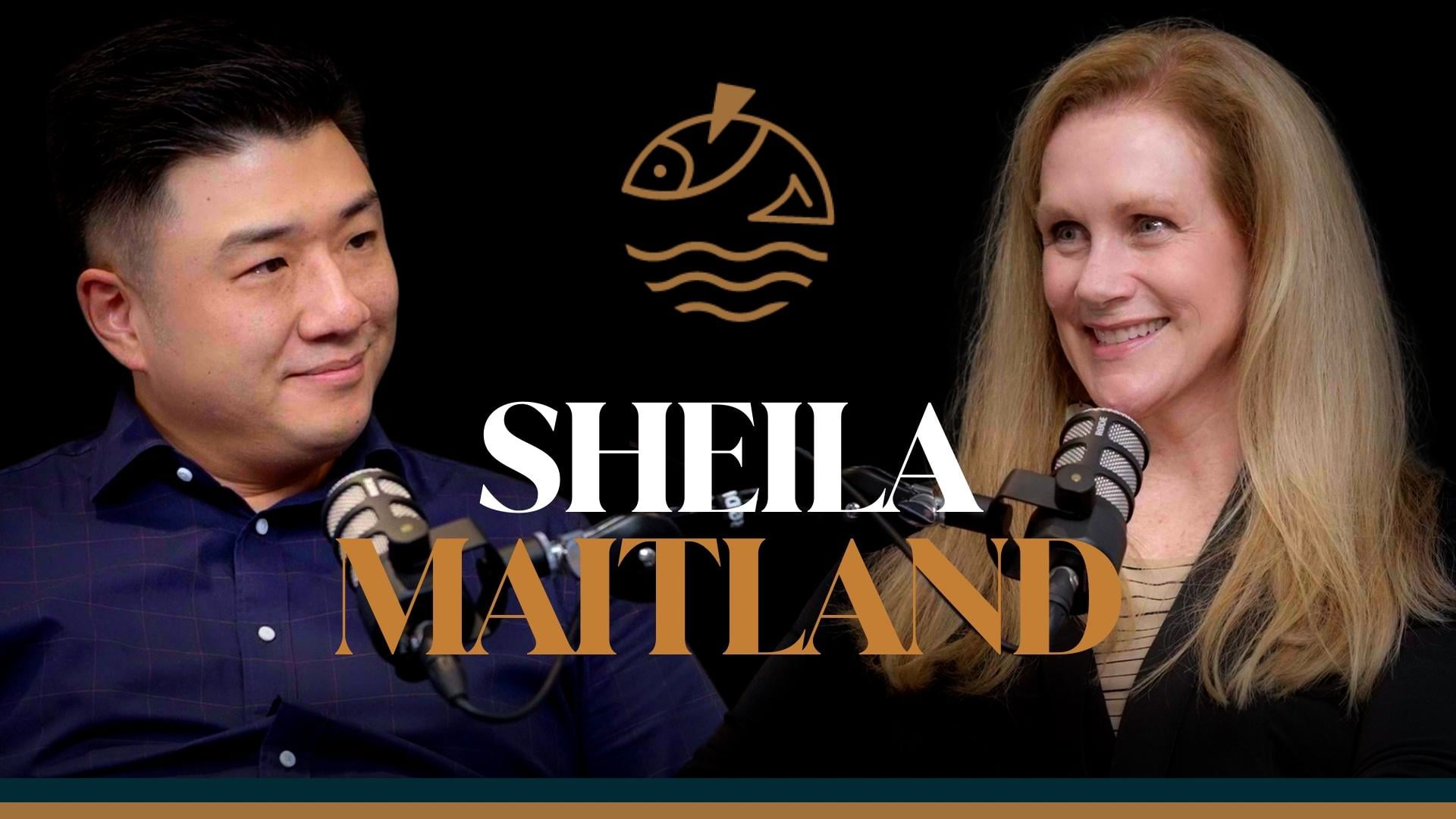
In this podcast episode, Dr. Harold Hong and Justin McLendon are joined by Sheila Maitland, the leader of the Relationship Enrichment Center and Experiential Therapy Center in Matthews, North Carolina, to discuss love and self-medicating. Sheila shares about her private practice, which provides a continuum of care for addiction and codependency, and how they use experiential therapy to invite people into action.
Facebook
Twitter
Pinterest
Tumblr
Copy Link
Link Copied

"I am a recovering addict myself, but if someone had told me 30 years ago when I got into recovery, I would have wanted to fight about the name as opposed to look at whether I was maybe doing some things or as having some consequences because of my drinking."
Sheila Maitland
Sheila Maitland | Love & Self Medicating
Dr. Harold Hong: [00:00:00] Well thank you for joining us, everyone. Today we have Sheila Maitland, the leader of the relationship in Richmond Center and Experiential Therapy Center in Matthews, North Carolina, just outside of Charlotte. Yes. Thank you so much for joining us, Sheila. Thanks
Shiela Maitland: for having me. It's a pleasure. Yeah.
Dr. Harold Hong: Yeah. And we also have Justin McLendon executive Director here at New Waters Recovery. Thanks for joining us, Justin. Absolutely. Glad to be here. Okay. . So today we want to talk about love and self-medicating. Hmm. And Sheila, can you tell us, before we begin, tell us a little bit about Relationship Enrichment Center and what, what kind of work you do there?
Shiela Maitland: I would be glad to. The Relationship Enrichment Center is a private practice, it's a group practice. We have eight clinicians and we provide a continuum of care. We work with. Addiction, but we also work heavily with codependency, and so [00:01:00] often it is the family member doing the work, trying to find something for their loved one, and they're the ones that need so much assistance and they really can make a difference.
Their willingness. Mm-hmm. . We're an experiential practice, which means when we work with people, we invite them into action. And when I try to describe. , what that means. It's a little bit like I could show you a picture of the ocean. I could let you listen to the ocean and I could tell you about the ocean.
But until you stand in it, taste the salt water, feel the power of it. It's, and I think that's such a great metaphor to what experiential therapy is. . We also work with [00:02:00] individuals, couples, families, groups, and we do workshops. So we do many things and I also, we work with a lot of professionals in Becoming licensed and training.
Mm-hmm. , experientially. Mm-hmm. .
Dr. Harold Hong: You do it all.
Shiela Maitland: You do it all. . It's probably more than you wanted, but yeah, that's, no, I love, it's what we do. I think
Dr. Harold Hong: it's really important for people to know Yeah. That there are places like the R E C where they can get help. Yeah. So here at New Waters, we help a lot of individuals who are in marital distress.
Yeah. , their, the, the marriage is on the rocks and part of how they got here is they got kicked out. Yeah. And so I think for, for the benefit of the many people out there, cuz this is way more common Yeah. Than we would, we would want it to be. So if you could maybe think about a, a client or a story where, where you were involved in assisting [00:03:00] and just if you could tell us about how you worked with them and, and how they wound.
at your doorstep.
Shiela Maitland: Hmm. . Okay. So often we'll get a call from someone that's calling about someone. Mm-hmm. . In fact, I have a couple people that I'm seeing next week that are trying to. Support their adult child or a spouse and they wanna make sure that there's a session set up for that person. . And while that's amazing and yes, we want to help that person, I would prefer to work with that set of parents or that partner first.
Mm-hmm. , because it is so the, so often the family is experiencing their own P T S D, their [00:04:00] own walking traumatic experience of. , are they gonna make it this time or not? Mm-hmm. And trying to help them with beginning some self care for themselves that that is such a powerful way to support whoever is in treatment or in trouble or off the rails.
Yeah, it's a little bit. , we need to put our own oxygen mask on first and let's make sure we're sucking oxygen. Mm-hmm. not more crazy. Yeah. Mm-hmm. . Yeah.
Dr. Harold Hong: What are some of the traumas that, that are going on that there I can't handle anymore? I need to call for help. .
Shiela Maitland: Well, it can certainly be the obvious ones, like a DUI or some type of huge financial [00:05:00] betrayal that's come out, or some humiliating or embarrassing public event.
It could also be some infidelity. All the things that happen when too much too many spirits or. . Mm-hmm. . Yeah. The consequences of a car accident. The consequences of yeah. Doing something that one shouldn't do that often is present with drinking and drugging. Yeah. Right. Yeah.
Justin Mclendon: Do you feel like these are sometimes these events that you're mentioning, do you feel like these are sometimes kind of like the catalyst that leads to the, the reaching out for help, that maybe there's a pattern that's been going on for a while and then there's kind of.
a major event or a precipitating event that takes place?
Shiela Maitland: Absolutely. Mm-hmm. . And when I get to work with that family member, I get to hear something about the backstory, because usually [00:06:00] to your question about the tr the trauma, it might be that this is a repeat of someone. Family of origin from 30 years ago, like the couple where the wife calls her husband is struggling with addiction and she doesn't know what to do.
And when she comes in and begins to unpack some of her story, of course she was raised in a family where there was addiction. And so the trauma of hmm. The repetition, the participating with somebody who's not really there. They might be there in body, but. Because of the inebriation, because of the lying, [00:07:00] because of all of the manifestation of active using, it's triggering something.
Hmm. Something obvious to an outsider and to a professional, but to the client or the wife. In this example, she can't connect those dots. Mm-hmm. , because she's right in it. She's in some paralysis. Right. Why? Wow. Yeah.
Dr. Harold Hong: So in this story, the wife called you? Yeah. To. the guy, right? And what's her? And she has no awareness of her own right?
Her own piece of it,
Shiela Maitland: right?
Dr. Harold Hong: So what happens when she sits down? How do you get her in the door?
Shiela Maitland: Well, that's when, when she gets in the door, we've got some hope. Because so often it's like, no, no, no, no. He's the one. He's the problem. He's the one that needs to [00:08:00] be here and trying to. , acknowledge and really listen to her and her belief, and also suggest that we can also help her.
Mm-hmm. , it's, it's, I wish it were easier . Sure, yeah. But when she does come through the door, . Hopefully she'll feel seen and heard. Really good therapy starts with feeling seen and heard and creating lots of emotional safety with whoever she's working with, whether it's me or one of my staff, and being able to address what is right on top.
and so trying to help provide resources. This might be the only [00:09:00] session the wife ever comes to. Mm-hmm. . And so making sure she's got really good information and hopefully she'll be curious and feel safe enough to come back. Mm-hmm. .
Dr. Harold Hong: Yeah. Wow. How do they respond? Like when you suggest or you, you get curious about them?
All they want to do is talk about the other person.
Shiela Maitland: Well, often they're in tears because they are so used to. Micromanaging mood managing, covering, enabling, making sure it looks good on the outside despite how fractured this person might feel on the inside, and so just inviting them to try to take a deep breath and [00:10:00] inhibit or inhabit their bodies for just a few minutes.
you know? What is it like for you? It's, I've had people say many times, no one ever asks me that. Wow. Or I don't really even know. I don't know how I am. Mm-hmm. , which I understand and relate to. Sure. And.
Justin Mclendon: so that they're so caught up in that, in that pattern, in that cycle. They're just not stopping long enough to pay attention to their self, I guess.
Right.
Shiela Maitland: Well, exactly, and that's the part that's so challenging to intervene on. Mm-hmm. , the illness being so sophisticated that it's certainly got the husband inebriated and doing whatever he's doing, but now the wife. [00:11:00] is also so impacted by the illness that she has an illness too. Mm-hmm. and the. , part of its presentation of course, is denial.
Sure. That is sophisticated. That's a complicated thing to try and . Yeah. Like I can't explain it. , you know,
Dr. Harold Hong: so they're coming to you cuz there's a problem. Right? But they're gonna deny right that there's a problem.
Shiela Maitland: Well, they might be okay with it being a problem for their partner, right? Mm-hmm. . , but to try to talk about ways that they're possibly supporting the illness.
Yeah, like I love, I love when I get to help somebody separate their love for the person [00:12:00] you can love. Your man and hate their illness. Mm-hmm. be angry at what their I, their husband's illness is taking from them, from the family. Yeah. And that we as humans have the capacity to have both those things going on at the same time.
And it's not disloyal. to be loving the person and very mad. Mm-hmm. at what's happening. Same way one would feel if someone had cancer. Yep. Mm-hmm. , you know, I love this person and I hate their illness. Mm-hmm. . .
Justin Mclendon: Yeah. I love the way you kind of separate those two things because I think, you know, especially those of us that you know, work in this field and understand that disease, it, it is, it really is two separate kind of entities, right.
In that person, you know, their brain, [00:13:00] and I won't get too much into that, but becomes hijacked and they're, they're not right who they are on the inside. Right? Right.
Shiela Maitland: Yeah. Mm-hmm. . Yeah, absolutely. .
Justin Mclendon: It's true.
Dr. Harold Hong: So sometimes you use the word you, you don't. I know from previous conversations you don't like the word addict or addiction but you use the word medicate.
Yeah. What's, tell us what is a medicator?
Shiela Maitland: So, a medicator is anything that is numbing me or blocking me. . So a number could be the Dairy Queen. Hmm. The number could be the six hours of Netflix that I love watching. The number could be my obsession with my business. Hmm. And I think what.
the distinction between when is it a thing and when is it a medicator or a number [00:14:00] is when are there consequences? Mm-hmm. . Mm-hmm. , am I having consequences because I can't stop watching whatever Netflix. Yeah. Am I having consequences with my health because I'm not putting healthy food in my body and.
I really prefer talking about medicators numbers and even invaders because so often the things that keep us from addressing what we need to address are certainly valid. So an invader to someone's couple ship could be a newborn baby. , and that's a beautiful thing, but it makes it really hard for the couple to spend time together when there's a newborn in the house, right?
Yeah, absolutely. The other thing about the word addict is [00:15:00] there's a lot of assumption. It's one thing if I want to share, and I do that, I'm a recovering addict myself, but if someone had told me, 30 years ago when I got into recovery, I would have wanted to fight about the name as opposed to look at whether I was maybe doing some things or as having some consequences because of my drinking.
Mm-hmm. ,
Dr. Harold Hong: so you're saying I, I'm not an alcoholic. I fell, or
Shiela Maitland: Oh, I tripped. Yeah. I didn't eat enough before going out. You didn't study? That was my favorite one. Yeah. Didn't have enough to eat. Yeah. Right. That was not true. ,
Dr. Harold Hong: that was not true. You hinted that like when, when someone's spending a lot of time in a medicated state.
Yeah. They're, [00:16:00] they're not connected with reality. Yeah. They're, they're not connecting with their partner. Right. So like, what is it like to. in a relationship and in couples therapy when a medicator is still burning wild in someone's life,
Shiela Maitland: the word that comes to mind is crazy making because it's a little bit like one minute the person's there and then without any hint, rhyme, or reason, they're not there anymore.
Yeah. Like the veil drops and
what I think is so difficult for the partner is, to not make it about them. Like, where'd you go? What did I do? What did I do wrong? Why did you use again? Did you use again? Yeah. I don't trust my [00:17:00] own experience of knowing the signs and symptoms, and I don't have the skill to speak about. What I want or need, and I make this mistake of talking to the person while they're inebriated, right.
Or high or checked out and then get incensed when the next day they don't remember the conversation. Mm-hmm. like, like they're in a blackout. Wow.
Dr. Harold Hong: Yeah. So there are people who are trying to have a real relationship with someone. . Yeah. It, it's just not working. Yeah. They, they wake up the next morning and, and they don't remember the whole conversation they had the day before.
Shiela Maitland: Yeah.
Justin Mclendon: And how frustrating that must be for that. The, the family member, right. You know, to trying to connect or trying to, you know you know, discuss an issue or whatever it is, and then to have, [00:18:00] you know, that be the outcome, right? To feel like, oh, you're not listening to me. You don't care. I can only imagine, right?
Mm-hmm.
Shiela Maitland: well, again, think that that speaks to the sophistication of the illness. Mm-hmm. , if I'm trying to connect with somebody who's not there, sure there's something possibly wrong with me. Mm-hmm. . Mm-hmm. . And then when they're not there, when I implode on myself, like I did something wrong, I must. Caused this.
Mm-hmm. or they must not like me. Mm. Like, that's kind of like, I would have to be, have some degree of compromised thinking as well, because if somebody on the street ignored me, and I was trying to talk to them. Mm-hmm. , there would be a point at which [00:19:00] I would stop trying mm-hmm. , right? Or if an employee or an employer, that's always such a great test, you know, like, mm-hmm.
what if this were my best friend and I was really trying to connect, act, and they weren't there, and then the next day.
Dr. Harold Hong: Right. It's, it's like a totally different set of rules, right? That people
Shiela Maitland: are living by. Right? This is a family illness. Mm-hmm. , there's no bypass. This does not just happen to one. The lowest common denominator in medicating and addiction is two.
There has to be two people. Even if I'm living under a bridge and I. Walking to the liquor store, somebody's gotta sell the liquor to me. . Right, right. [00:20:00] That's such a desperate analogy, but it is not, there has to be at least two people for this to continue. That's interesting. Wow.
Dr. Harold Hong: Yeah. Very interesting. So here at Noirs we say where there's addiction, there's trauma.
Mm-hmm. . Yeah. And now we can also say there's a relationship Yeah. That's sustaining it. Yeah. In some form or another. So how, how do, how do couples get help? How, how do you tackle? Yeah. It sounds like what a puzzle.
Shiela Maitland: Well, I think it really helps to talk to somebody that knows more than they do. So that could be a family member, usually not , but it could be somebody that's willing and able to [00:21:00] share their experience, strength, and hope it can. The field has changed. and the access to information about how to get help is so much greater than it used to be.
In addition to the lowest common denominator being too, I think at the root of addiction and co addiction or families being in this. a level of dishonesty. And so how they go about asking for help from somebody that knows more than they do. If I were worried that I had cancer, I would not go ask my accountant.
Dr. Harold Hong: Mm-hmm. , [00:22:00] that's a good point. Mm-hmm. ,
Shiela Maitland: I would not ask my mom if she thought I had cancer. , right? Because she would, well, she would get me to the doctor, but , so I think trying to talk to somebody or read something. I mean, if you Google. There, there are thousands of ways to access help. And of course you could call New Waters
True. Yeah. . I mean, there's just so many people that are really wanting, willing and ready to share how to get some support and. . Mm-hmm. . In fact, one of the principles in recovery is this statement that together we can do what I could never do [00:23:00] alone. Which is, yeah. Yeah.
Dr. Harold Hong: But I think a lot of people wrestle with shame, of course.
And they're so embarrassed to even asking a stranger for help is, I know. humiliating to them. I know. And they can't bring themselves to pick up their phone. Where do you think that comes from? And like what, what could people, how can people deal with that?
Shiela Maitland: Well, I agree and I think where it comes from, There's a lot of places that it comes from. I think in my own family of origin, cuz I come from a family that's also my parents are both alcoholic and they're in recovery and have 45 years, which was so profound with how I was able to find [00:24:00] recovery. in my twenties rather than in my forties like they did.
And
I think in my family of origin being rewarded for being independent and being a problem solver, I felt, I remember feeling like I got a promotion. Like, like, I don't need help and why? You know, like that was so and I don't think anybody was trying to hurt me or harm me, but I think it was a byproduct of,
I just got a lot of kudos for being so. Creative, so mature for my age. She never needs anything. She just does her homework. Like all these great things. And I think for me, [00:25:00] that certainly fostered a difficulty in whether it's asking for help or just being more truthful, you know? Cause when, if I did ask for help, I could say, I could sort of talk my way out of.
receiving any help. Mm-hmm. , right? Yeah.
Dr. Harold Hong: But you said something about being pretty independent, like Yeah. But that's the, the sunny side of neglect from the way that I'm hearing it, and I see that with the relationship. Yeah. The being, being in a relationship with someone who's gonna spend the next 24 hours inebriated.
Yeah. Right. This is the kind of person who's, who's normalized being alone. Yeah. Who's normalized not getting help and being celebrated for not needing help. Mm-hmm. .
Shiela Maitland: Absolutely.
Justin Mclendon: And then I think there [00:26:00] probably becomes this part of, I mean, similar to what you were saying is that, you know, if that's, if we're getting praised for that, if we feel.
you know, that that's important, that we have all the answers, that we don't need help from other people. Then I think just this sheer asking for help or reaching out as this admitting that we are less than, we're not capable. And that feels a lot like shame, right? Is that like, well, there's something wrong with me.
I'm broken, can't do these things for myself if I, if I have to reach out for someone. Exactly.
Shiela Maitland: Yeah. I think that most of the people that I work with, So capable to do alone. And sometimes I'll even say that you've got that part down right? And what I wanna help you with is connection, because that's how we get better.
And I think that.
the age of information. While it's great, I think it is also really [00:27:00] isolating and only adds to the difficulty of asking for help. Mm-hmm. , because I can look at Facebook and not do anything on Facebook and feel bad. You know, it's just, for some of us, it's sort of inherent that it's a comparison. Mm-hmm.
totally. And yeah.
Dr. Harold Hong: I, I know a lot of people have waves of shame. Yeah. As they're scrolling through, seeing how other people are doing things that they're not doing. Yeah. Have things that they don't have. Yeah. And they feel so low. Yeah. It it, and we've all been there . Right, right. So shame is, is everywhere.
Everywhere. We all wrestle with. And some of us, through our recovery and our work, we figure out a way to deal with it in a healthy way. In your, in your practice when you're working with clients, is there any experiential Hmm. [00:28:00] Exercise that they can do to think about or practice? Yeah. Getting rid of this, this toxic shame or dealing with it in some way.
Shiela Maitland: I'm pausing with how I wanna answer that because you can't do this in your bedroom by yourself, right? I mean, you can try, but I don't think it's gonna work. But one of the ways that we will often simulate or experientially show is talking about the shameful events. Like naming a couple of shameful events that have maybe happened in somebody's life and being able to place that on a scarf so that it's externalized, it's off the person, but then out on the floor and.[00:29:00]
Being able to look at it from some different perspectives, and then possibly if it's a group, if this were in a group process, maybe having a role player in role as the client so that the client can see themselves with all this shame on them. Mm-hmm. . and then having them reverse roles, like putting it on the client.
There's other ways. And then of course the, the healing about, you know, I want to take this off, or I can't believe this feels so heavy. Building a picture of one's shame so that they can get it off of them. , the very act of sharing what is so [00:30:00] shameful Yeah. Is how we rewire the nervous system. If I've been secretly feeling bad, shameful, and embarrassed about the things that I did when I drank.
Hmm. To be able to take that off, to take the secret out of the vault. The vault being me. Mm-hmm. . Yeah. And to have other people acknowledge to validate not to give advice. , but to connect it is the experience of feeling seen and heard that rewires a different neuro pathway in the body. And what am I, what am I saying about that?
I don't have to spin out in my familiar shame spiral that. I'm a this or [00:31:00] I'm a, that. When I take the risk, when a client takes the risk and is guided into some shame, reduction or taking the, the heaviness of shame off of them and then hearing other people say that they. could connect to that story.
That's where the rewiring, the, the being seen and heard and I, and loved really is what's happening. That that's where the reheal happens.
Justin Mclendon: Mm-hmm. . Yeah. So I hear you saying that shame is kind of, This is just my summary, if you will, but shame is isolating and maybe we could define it as disconnection.
And then it sounds, totally, sounds like the healing from that is fostering the connection. Right.
Shiela Maitland: Yeah. We should have just asked you Justin , that was much shorter. Yes, of [00:32:00] course. Just making
Justin Mclendon: sure that I'm understanding it. You've got it. Yeah. That's good. That's good. Yeah. Yeah.
Dr. Harold Hong: But I couldn't agree. But every warring piece is so powerful, Sheila, because I mean it's, it, it stirred up a lot of stuff for me as I was hearing you talk about it.
I, I, I had my own powerful recovery experience in experiential group therapy. And you, I, I can remember you know, feeling lots of shame growing up in, in a very perfectionistic Yeah. Kind of. You need to figure all of this out on your own, and if you can't do it, what's wrong with you? Like, this is kind of the story, right?
Like, there's something wrong with you if you can't figure it out on your own. Mm-hmm. and. My, my, my gut tells me when I'm feeling shame, I just need to carry it by myself. Right. And fight through it. And, and if I can't fight through it, then it's my problem. But surprise that it leads to burnout and you just get completely fried and you're, you have no energy left to, to keep fighting.
But what you're saying [00:33:00] it sounds like people find a. to feel shame and then they know how to Yeah, be free of it. Yeah. But it's, it's through connection Exactly. With other people.
Shiela Maitland: Mm-hmm. , and it starts in an individual process, meaning that that client might see a therapist individually, they might go to group.
And be able to do work in group. That's really healing. And it's usually after that that it, they have enough skill and enough knowledge of themselves to be able to teach their partner and even share with their partner. Like imagine. So I'm going along with my partner. and I've had no [00:34:00] therapy treatment or awareness, and something happens and I'm triggered and I'm having a shame response.
So I'm sitting in the car. Mm-hmm. for six hours. I haven't said a word and I'm crazy. I'm absolutely unreachable. Mm. . I start doing my work. I start going to therapy. I start realizing that I'm not terminally unique, that others also heal from shame. and many other things, and I begin to give myself a little bit of bandwidth, A little bit of a break, I start to have a relationship with myself so that I'm not so bad, [00:35:00] wrong, horrible, blah, blah, blah.
I start to experience that in a safe healing circle and I begin to acquire some skills to where I might say on that drive after I've been triggered. Could we please stop? I wanna get some water. Hmm. be able to get a little bit of a break and maybe say, I'm having this huge reaction, you didn't cause it, and I'm kind of in a dark place right now.
Mm-hmm. , would you hold my hand? Like, my partner doesn't have to know anything. He doesn't have to know how to fix me, how to take care of me. I've made a request. He knows really, really well how to hold my hand. Mm-hmm. , this is [00:36:00] me being much more able to be responsible for what's happening for me and my partner.
Didn't cause it. Can't control it. Yeah. Mm-hmm. . Yeah. It. It becomes what I'm learning about myself and for myself starts to flourish in my relationships with my partner, with my children, with my parents, with the people that I work with. I become more of a citizen, citizen of the world. Yeah. I love
Dr. Harold Hong: that.
Yeah. Very cool. . I, I just love the direction you're taking here, Sheila, cuz it's so often in, in this business of addiction, recovery and, and, and treatment. We focus so much on the person with the diagnosis. Yeah. Right. But their loved one is [00:37:00] really hurting. Yeah. They're, they're really beat up
Shiela Maitland: too. Well, they're probably, Not gonna wrap their car around a tree, but death by a thousand paper cuts is excruciating.
Right. And it's the, the symptomology is slower and it's, I sometimes refer to it as it's mild misery. Mm-hmm. . Mm-hmm. , but then it. Heavier and heavier. Yeah. Yeah.
Dr. Harold Hong: I mean, the conversation started with like, how do we get the non medicating partner to help the medicating partner? But a lot of times they're, they, they come to you asking for help, but that's actually a sign of, of how depleted they are.
Yeah. Right. And so [00:38:00] sometimes the best way to. that other person is exactly what you said is you, you gotta put your oxygen mask on first. Exactly. Need needing to be healthy and have strength and vitality if, if you have any chance at helping your loved one get there themselves too.
Shiela Maitland: Absolutely. I couldn't agree more and I'm always amazed at what better way to.
support your partner or your loved one than by modeling? Yeah. You know, if I do the very thing I want my partner to do, chances are they're more likely to do it . Right, right. I don't know why that's so hard for some of us. Uhhuh. .
Dr. Harold Hong: Yeah. Yeah. Well, I think a lot of people think of this. They think of addiction and self-medicating as something you have to.
Yeah. Right. Absolutely. Stop drinking. Mm-hmm. , stop using, [00:39:00] stop getting high. Yeah. It's, it's easy. Yeah. Why do you keep doing this? Right? What's wrong with you? Yeah. But what you're, what you're saying is love yourself. Nurture yourself. Yeah. Pay attention to yourself.
Shiela Maitland: Well, and I would also say if you are using and medicating.
try stopping for 90 days and just see if some of the craziness softens. Mm-hmm. . Mm-hmm. , like, it's usually, it's my belief that if someone is in trouble with medicating, it's exacerbating the disconnection of their life. Mm-hmm. and.
to try it as an experiment and see if it gets any better. Yeah. Yeah.
Justin Mclendon: You know what, just something that [00:40:00] came up when you were saying that is that you know, I think. . A lot of times we think of this as people see it as the problem. Like Dr. Hong said that it's something that we have to stop. Yeah. But, you know, I think for a lot of people that that has become maybe the solution for, you know, maybe this other forms of disconnection and you know, just just not feeling well.
Whatever this, this Dysfunction that's happening internally and in our lives, that, that, you know, at some point we have consciously or unconsciously like reached to the drink or the drug or whatever that, that, that medication is as the solution, if you will. So I'm wondering, just thinking about that, that experiment there.
Like, so if I was a substance abuser and I decided I'm just gonna stop for, for 90 days, I wonder what sometimes that looks like when we're able to look at like those other areas of our life that are maybe we. Masking or, or coping with, with that alcohol or other drugs. Right, right. Yeah. That's gotta be pretty tough, I would imagine It's
Dr. Harold Hong: scary.
Shiela Maitland: Scary. Well, and I think that's so powerfully why, like when the focus isn't on [00:41:00] just removing the substance. Mm-hmm. , it switches to then how do you live? Right. How do you live without this? Mm-hmm. . And how do you learn how to recognize your feelings? Because of course, the anesthesia, the, the numbing mm-hmm.
cuts the feeling. So how do you identify what it is, and then what do you, what is that informing what you. .
Dr. Harold Hong: Mm-hmm. . Yeah. That's very interesting. Wow. Well, Sheila, it is so painful to deal with not paying attention to yourself, like the, the misery, right? Yeah. Yeah. And I think it's just incredible like, to, to make it so simple that a, pay attention to yourself and, and work with someone who knows how to guide you.
Yeah. In reviving this art of taking care of. . [00:42:00] So but how do you, if, for the people out there who are listening, who, who might not know how to find a good professional to help him with this, like, what's your advice on how to find a good person to work with? Mm-hmm.
Shiela Maitland: it's my, it's my belief that if a, a client. Can ask the therapist or whoever they're considering. Well, like we could go to psychology today.com. Mm-hmm. , and just start there. Yeah. And in vetting, who is the fit for you? I think as a consumer, any person that's considering coming to therapy, if they're not able to read a bio or get a sense for somebody by looking at their website or [00:43:00] looking at their profile.
Mm-hmm. and, and their gut is saying no. Mm-hmm. to trust that. Mm-hmm. . I think asking somebody that is pleased with the therapist they're seeing. That's a great way to find somebody I think. Reading Google reviews. I think having a 15 minute consultation with somebody to see if it feels safe for you to then go and see that person.
Yeah, I think that's really reasonable and I think as a consumer, Someone isn't able to advocate for themself with a particular person, that that's information enough that they should keep looking. Mm-hmm. , that would be my encouragement.
Dr. Harold Hong: Yeah. Well, if, if I may be support, I would, I would [00:44:00] wholeheartedly recommend.
people reach out to relationship and Richmond Center. Mm-hmm. Sheila, I know you do incredible work with the clients that are lucky enough to connect with you and Mm. I think the safety piece is what's so wonderful about the rac safety is the first thing. Yeah. Right? Like this is a safe place there.
You can share your shame. Yeah. In safety. , you can, this is a place where you can learn how to be free of that misery. So we, we will have your, your contact information in, in the notes. Thank you. In the show you. But you know, I know that Justin, now we, we are fortunate enough to see this all the time here is people who come in carrying unbelievable weights.
Yeah. Unbelievable emotional baggage. Yes. And. , they, for the first time get a sense of the, the freedom and the lightness. Yeah. That comes from [00:45:00] finding a new way to go. Absolutely. Letting go of that shame. Mm-hmm. And having the energy to find a new way to live again. . So this is, it's possible . It's a, it's a great thing that we, it's a great way to wake up in the morning and know, Hey, I'm gonna go do that thing today.
Yeah.
Shiela Maitland: Mm-hmm. Well, thank you Dr. Hong. I really appreciate it, and thank you, Justin. Absolutely. This has been fabulous. Great job to you. You're welcome.
In this podcast episode, Dr. Harold Hong and Justin McLendon are joined by Sheila Maitland, the leader of the Relationship Enrichment Center and Experiential Therapy Center in Matthews, North Carolina, to discuss love and self-medicating. Sheila shares about her private practice, which provides a continuum of care for addiction and codependency, and how they use experiential therapy to invite people into action. The conversation delves into how often family members are the ones seeking help for their loved ones, but they themselves need assistance to deal with their own walking traumatic experiences. They emphasize the importance of self-care and putting on one's own oxygen mask first to effectively support those in treatment or in trouble. If you're interested in learning more about love and self-medicating and how to get help, tune in to this insightful podcast episode.
Shiela Maitland Links:
Instagram: https://www.instagram.com/relationship_enrichment_center/
Linkedin: https://www.linkedin.com/in/sheila-maitland-lcmhcs-csat-09154254/
Facebook: https://www.facebook.com/relationshipenrichmentcenter/
Website: https://www.relationshipenrichmentcenter.com
bottom of page